August heat and sparse rainfall can take a heavy toll on turfgrass. Discover how proper mowing heights, smart irrigation tweaks, and heat-stress management protect your lawn through the toughest month of summer.
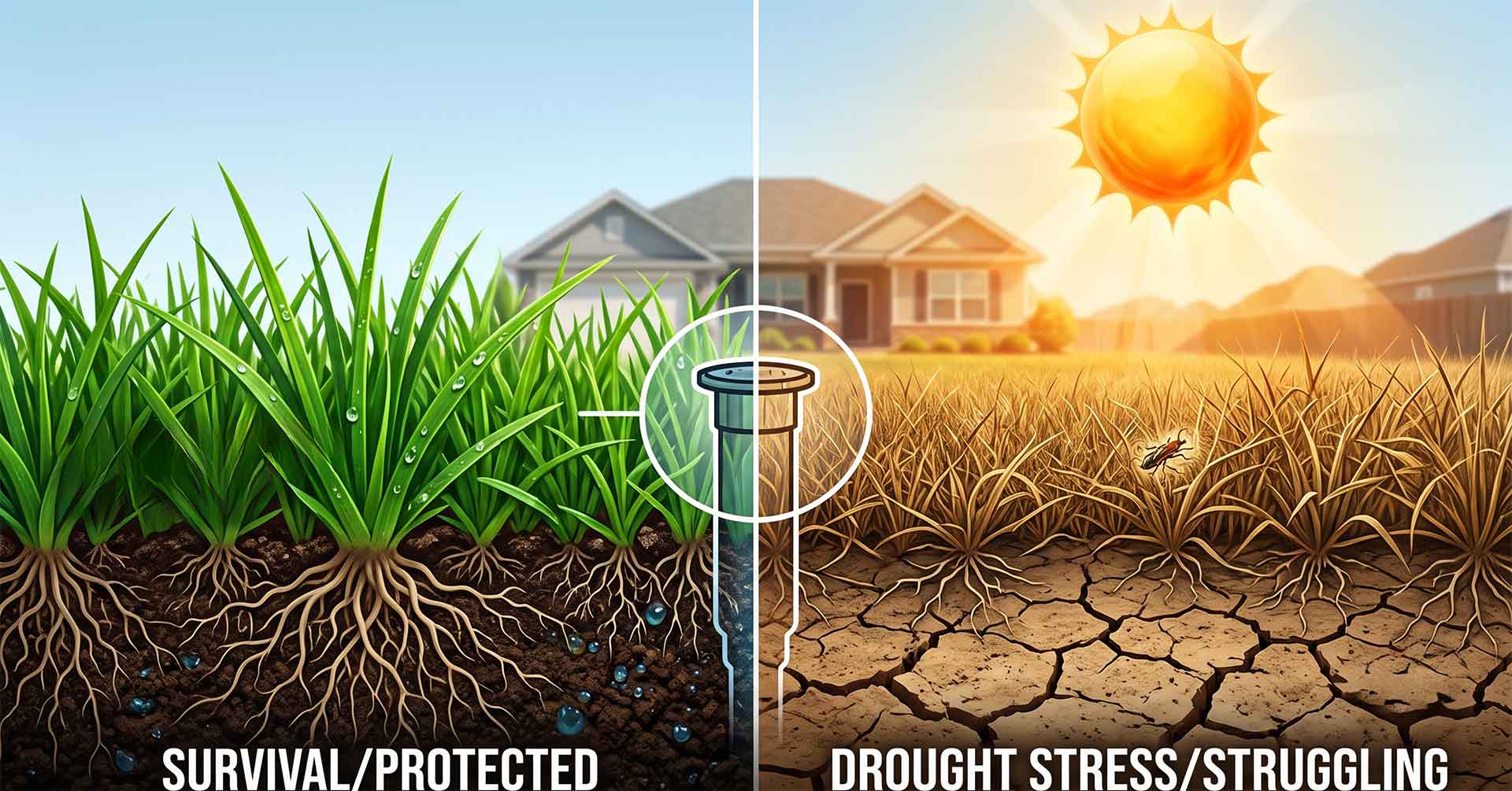
As August arrives, lawns face their toughest environmental test of the entire year. Soaring triple-digit temperatures combined with sparse, unpredictable rainfall mean turfgrass isn't just trying to look good—it is actively fighting for survival.
If your once-vibrant green lawn is starting to show signs of heat stress, dull color, or localized dry spots, don't panic. Understanding how turf responds to late-summer weather is the key to protecting your root system until cooler fall temperatures arrive.
1. Adjust Your Mowing Height: Protect the Roots
During spring and early summer, keeping grass cut shorter encourages dense growth. However, lowering your mower deck too far in August is one of the fastest ways to scorch your turf.
- Create Canopy Shade: Allowing your grass to stay slightly taller creates a deeper canopy that shades the soil surface. This lowers soil temperatures and dramatically slows water evaporation.
- Prevent Scalping Shock: Cutting off too much blade height during severe heat removes the green foliage the plant needs to feed itself, plunging the root system into severe shock.
- Keep Blades Sharp: Dull mower blades tear grass tips instead of slicing them cleanly. Torn, frayed grass tips quickly turn white and tan in the August heat, giving the whole yard a bleached, burnt look.
2. Deep Watering Beats Frequent Splashes
When rainfall disappears, the natural reaction is to run irrigation cycles for a few minutes every single day. Unfortunately, frequent shallow watering causes long-term damage during a drought.
- Train Deep Roots: Watering deeply and infrequently (1 to 2 times per week, depending on local water restrictions) forces roots to grow deeper into the soil where moisture stays protected from surface heat.
- Cycle and Soak for Clay Soil: Heavy clay soils absorb water slowly. Utilizing a "cycle and soak" method—running zone times in split intervals with breaks in between—allows water to penetrate deep into the root zone without running off down the gutter.
- Audit Your Sprinkler Zones: High heat reveals every hidden flaw in an irrigation system. Clogged nozzles, low-pressure heads, or broken pop-ups quickly turn into stark brown patches when natural rain stops falling.
3. Avoid Heavy Nitrogen Fertilization
It is tempting to throw down high-nitrogen fertilizer when a lawn looks pale or tired in August. However, pushing rapid top growth during extreme heat stress can burn root systems and deplete energy reserves when the plant should be conserving strength.
Late summer is the time to focus on soil moisture retention, deep root preservation, and prepping for fall pre-emergent weed control treatments coming up in September.
4. Watch Out for Late-Summer Pests
Hot, dry conditions create the ideal environment for specific lawn pests that thrive in heat-stressed turf:
- Chinch Bugs: These microscopic pests cluster in hot, sunny areas of St. Augustine lawns (especially near concrete sidewalks and driveways). They suck plant juices and release a toxin that turns grass yellow, then dead brown.
- Grubs and Armyworms: August is peak egg-hatching season for subsurface grubs and surface-feeding armyworms, both of which can destroy large sections of turf in a matter of days.
If brown patches continue to expand despite proper watering, a pest infestation—rather than just heat—may be the culprit.
Keep Your Lawn Protected All Season Long
Managing a landscape through the August stretch requires the right balance of sharp equipment, consistent mowing schedules, and smart watering practices. Staying on a steady, professional maintenance routine ensures your yard stays healthy, protected, and ready to bounce back vibrant and green when fall arrives.
Check out the latest guidelines from Texas A&M AgriLife Extension on heat management.