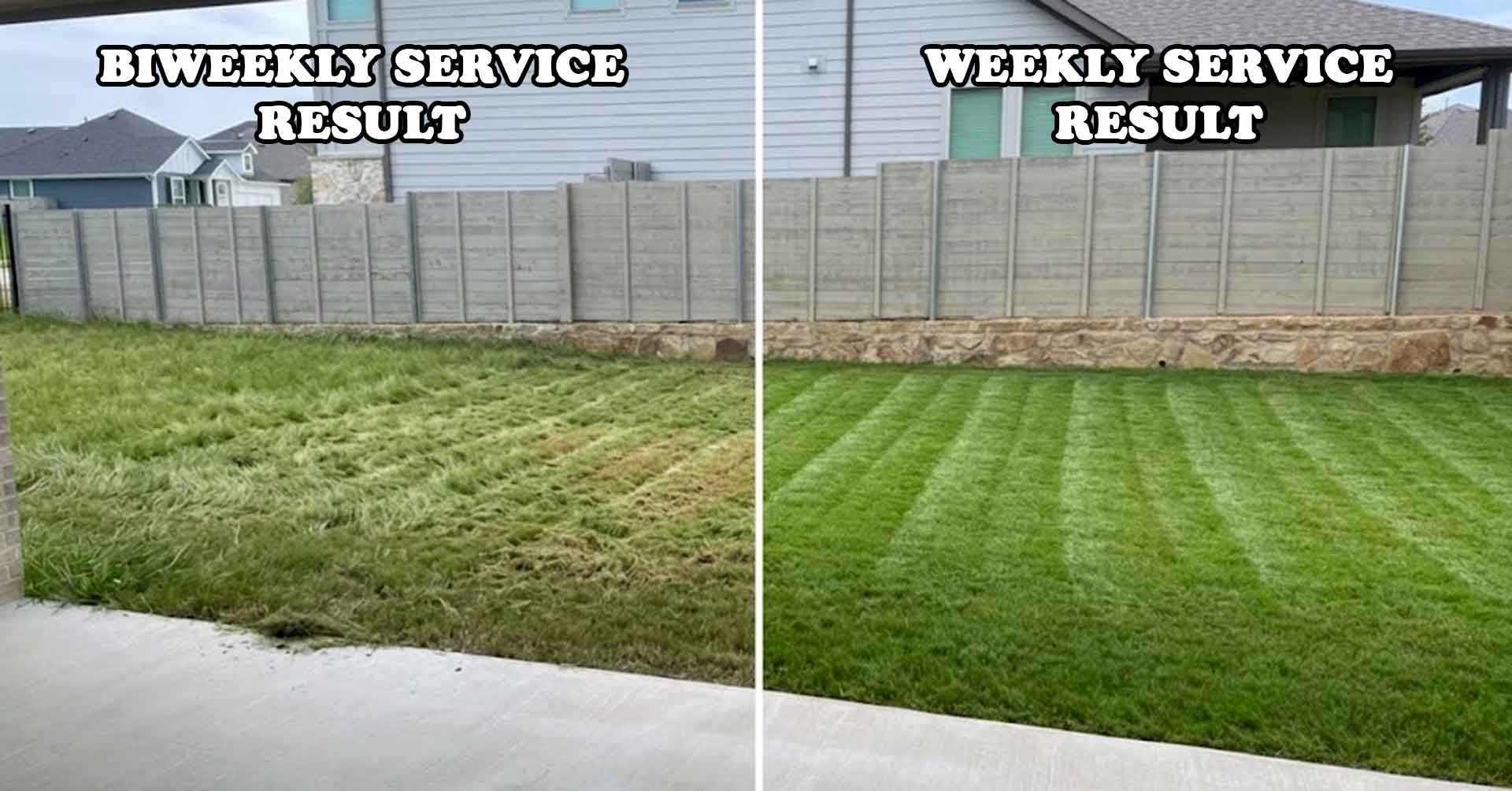
It’s tempting to think a biweekly schedule just means your grass is a little taller between cuts. In reality, during the peak growing season, biweekly mowing completely changes the look, health, and quality of your turf. Here is why weekly service isn't a luxury—it’s an operational necessity.
When choosing a lawn maintenance schedule, it is incredibly common to look at weekly versus biweekly service and think, "My grass doesn’t grow that fast, let’s just do every two weeks to save some money." It sounds reasonable on paper. But in the lawn care industry, there is a very specific reason why professional companies push for weekly service during the peak growing season—and it isn’t just a cash grab.
The truth is, it is physically impossible to achieve a high-quality cut on a biweekly schedule from late spring through summer. If you are actively watering your lawn and investing in a fertilizer program, trying to stretch your mows to every 14 days is actually working against your own investment.
Here is the breakdown of what happens when you cut lanky, overgrown grass on a biweekly schedule, and why frequency dictates quality.
1. The Bermuda Grass Problem: "Mohawks" and Striping
Different grass types handle height differently, but for standard North Texas turf like Bermuda, biweekly mowing is disastrous for aesthetics.
Bermuda grass is designed to be kept short, dense, and tightly knit. When it is allowed to grow unchecked for two full weeks in June or July, it becomes "lanky." The individual grass blades grow tall, thin, and top-heavy.
When a professional mower enters a biweekly yard, two frustrating things happen:
- The Mohawk Effect: Because the grass is so tall and flexible, the physical movement of the mower deck pushes the grass flat against the ground before the blades can cleanly slice it. Once the mower passes, that flattened grass pops right back up. A few hours later, your lawn looks like it has uneven, uncut streaks—commonly known as "mohawks."
- Ruined Striping: Clean, crisp lawn stripes are created by bending the grass reflection toward or away from you. When grass is overgrown and matted down by a biweekly cut, the clippings are too heavy and the turf is too damaged to hold a clean stripe. It ends up looking patchy and ragged.
2. Pushing the Limits: When Even Weekly Isn't Enough
During the absolute peak of the summer growing season, warm-season grasses experience explosive growth cycles. When conditions are optimal, a healthy lawn can easily grow several inches in a single week.
In fact, high-end athletic fields and golf courses are mowed three to four times a week for this exact reason. For a residential property, weekly mowing is already the absolute bare minimum compromise to keep the turf under control.
When you push that timeline to 14 days, you aren't just asking a mower to cut grass; you are asking it to clear a jungle. The sheer volume of green waste bogs down equipment, creates thick windrows of wet grass clumps that smother the lawn underneath, and turns a precision grooming session into a messy cleanup job.
The Fertilizer Contradiction: If you are paying for a premium lawn fertilization and weed control program, you are actively feeding the monster. Forcing a highly fertilized, well-watered lawn into a biweekly mowing schedule forces the grass to cycle through severe shock every 14 days, completely canceling out the benefits of your lawn treatments.
3. The Structural Damage of Severe Defoliation
Just like the first-cut principles of turf health, stretching cuts to every two weeks violates the golden rule of mowing: never remove more than one-third of the grass blade at one time.
When grass gets too tall, the green, leafy, photosynthetic part of the plant moves up to the very top of the blade. The bottom half becomes a woody, brown stem.
When a biweekly schedule forces a crew to hack off 60% or 70% of the plant's height just to get it back down to a standard curb-appeal level, it chops off all the green leaves. Your lawn is immediately plunged into shock, leaving behind a yellow, woody, scorched-looking yard that takes days to recover—just in time for the cycle to start all over again.
Consistency Equals Quality
There is a reason the standard in professional lawn care is weekly service. It isn't about how short the grass looks the day it is cut; it’s about maintaining a consistent, healthy ecosystem where the grass blades stay rigid, the cuts stay clean, and the turf never suffers from severe shock.
If you want a lawn that looks like a carpet rather than a hayfield, consistency beats a budget-stretch every single time.