Is your Bermuda grass looking thin, leggy, or brown after a fresh cut? Find out why the common advice to "mow it high" fails in North Texas, and learn the exact height that balances turf health with uneven residential terrain.
As the Texas summer heat cracks up into the 90s and 100s, homeowners naturally want to protect their lawns. A very common piece of advice circulating in neighborhood forums and general gardening blogs is to "mow your lawn at the highest setting during summer to shade the roots and retain moisture."
If you have a Fescue or Bluegrass lawn up North, that is excellent advice. But if you have a Bermuda lawn in North Texas, following this advice is one of the fastest ways to ruin your turf.
At the same time, trying to mimic a golf course putting green by dropping your mower deck to 1 inch usually backfires for the average residential property. Let’s break down the science of Bermuda grass, why the "mow high" myth fails, and why a 2.5-inch mowing height is actually the magic number for most McKinney, Frisco, Allen, and Plano lawns.
The Anatomy of Bermuda Grass: Why High Mowing Fails
Bermuda grass is a warm-season turfgrass that thrives on intense sunlight. Unlike cool-season grasses that grow vertically and bunch up, Bermuda spreads horizontally through a dense network of runners called stolons and rhizomes. It loves the heat, but it has a strict requirement: it needs direct sunlight penetrating all the way down to its crown to stay thick and green.
When you let your Bermuda grass grow out to 3.5 or 4 inches (the highest setting on most residential mowers), a few negative changes happen rapidly:
- The "Leggy" Effect: The lower portion of the grass blade and stem becomes completely shaded out by the top canopy. Because no sunlight reaches the base, the lower 2 to 3 inches of the plant turns completely brown and woody.
- The Scalping Trap: If your lawn gets too tall, the next time it is mowed, you will inevitably cut off the green top layer. This exposes the hidden, brown, leggy stems underneath. Your lawn instantly looks like a brown desert for two weeks while it tries to recover.
- Thinning Turf: Without sunlight hitting the soil surface and the lower crown, Bermuda stops spreading horizontally. The lawn thins out, creating perfect visual gaps for aggressive summer weeds like crabgrass, nutsedge, and spurge to take root.
The 1-Inch Reality Check: Why Shorter Isn't Always Better Either
On the flip side, turf textbooks and golf course superintendents will tell you that Bermuda loves to be cut short—ideally around 1 to 1.5 inches. Mechanically, this is true. Low mowing keeps the grass tight, dense, and incredibly green because the plant responds by pushing out more horizontal runners.
However, what works on a perfectly leveled golf course fairway rarely works on a residential lot in North Texas for one primary reason: the ground surface.
Most residential lawns across Collin and Denton counties have uneven ground. Between settlement over time, drainage swales, tire ruts from heavy equipment, and natural soil shifting from our heavy black clay, your yard is full of subtle bumps and dips.
If you drop a standard rotary mower down to 1 or 1.5 inches on an uneven lawn, the wheels will drop into a small dip, and the blade will completely scalp the high spots right down to the dirt. Unless you have professionally top-dressed your yard with sand to make it perfectly flat and are using a specialized reel mower, attempting a 1-inch cut will leave your yard looking patchy and chopped up.
The 2.5-Inch Sweet Spot: The Best Choice for Residential Lawns
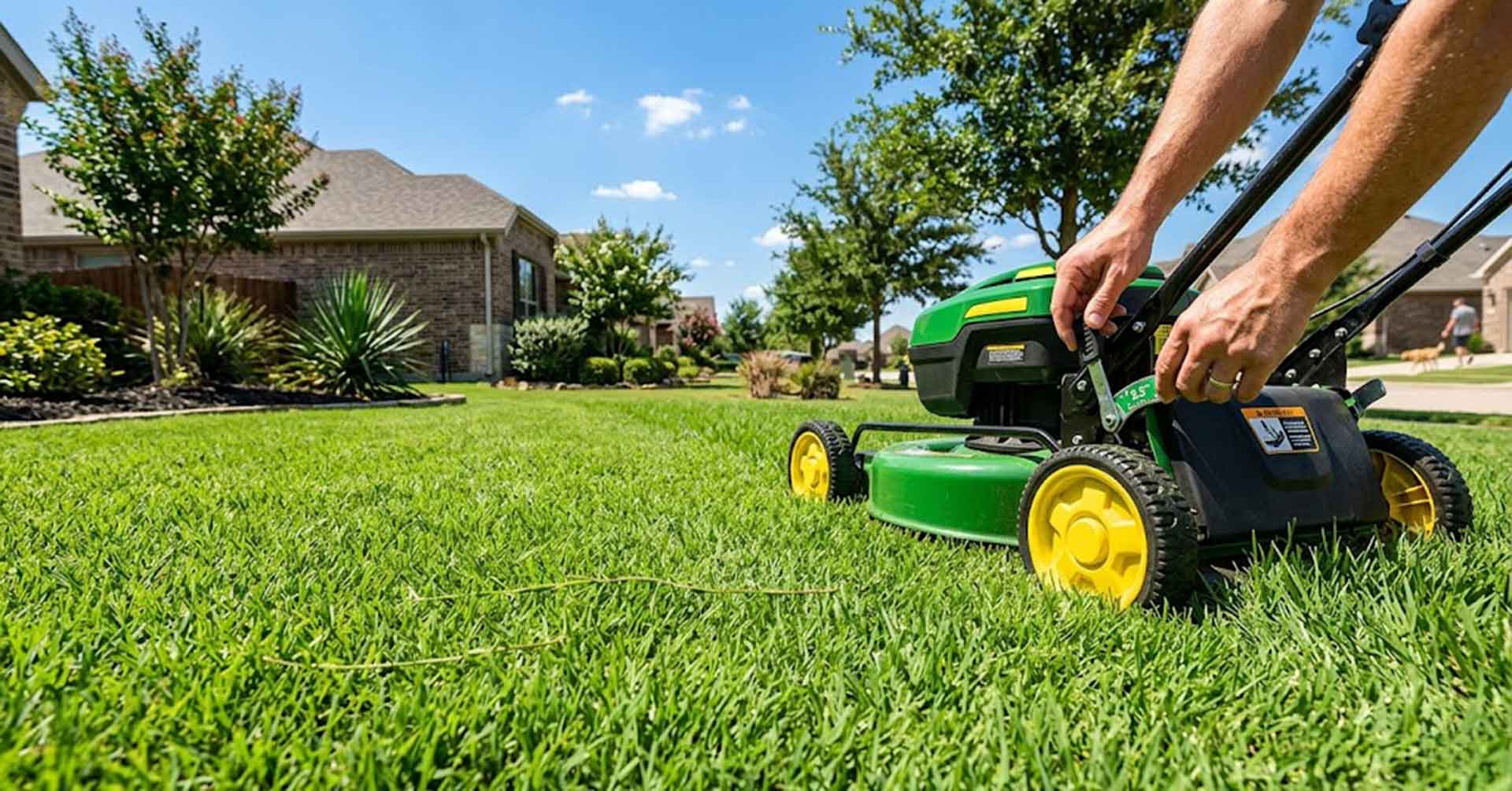
To balance the biological needs of Bermuda grass with the physical realities of a typical residential yard, the ideal compromise for the peak summer growing season is 2.5 inches.
Here is why 2.5 inches works perfectly:
- Buffer Zone Against Scalping: A height of 2.5 inches provides a safe mechanical buffer. When your mower rolls over a small bump or dip in the yard, the deck has enough clearance that it won't scrape down to the dirt or the brown woody stems. You get a clean, uniform, green appearance across the entire property.
- Adequate Sun Penetration: At 2.5 inches, the grass canopy remains short enough that sunlight can still filter down through the blades. This keeps the lower portion of the plant healthy and green, preventing the "leggy" browning common in taller lawns.
- Sustained Horizontal Growth: Keeping the lawn maintained at this height forces the Bermuda to continue spreading sideways rather than growing strictly upwards. This creates a thicker turf mat that naturally blocks out weeds and retains soil moisture far better than a thin, tall lawn.
Essential Summer Mowing Tips for North Texas
To maximize the health and appearance of your Bermuda lawn this summer, keep these additional practices in mind alongside your 2.5-inch height target:
- Follow the One-Third Rule: Never remove more than 1/3 of the total grass blade length in a single mowing session. If your lawn gets away from you during a rainy week, don't chop it straight back down to 2.5 inches. Take off a little bit first, wait a few days, and then bring it down to your target height.
- Mow Frequently During Peak Growth: In June, July, and August, healthy Bermuda grows incredibly fast. To maintain a clean 2.5-inch height without violating the one-third rule, the lawn needs to be mowed every single week. Skipping a week causes the stems to elongate, making a brown scalp almost guaranteed on the next cut.
- Keep Mower Blades Sharp: Dull blades tear the grass instead of cutting it cleanly. This leaves frayed, white tips across your lawn that quickly turn brown, giving the whole yard a dried-out, hazy appearance and opening the door for turf diseases.
Adjusting your summer mowing strategy to accommodate the unique growth habits of warm-season turf will keep your lawn dense, vibrant, and resilient all summer long.