As Bermuda and St. Augustine grasses wake up and growth explodes, you're faced with a classic lawn care dilemma: what do you do with all those clippings? Here is the definitive guide for your North Texas yard.
We are officially entering the "spring flush" in North Texas. With the soil warming up and spring showers rolling through the DFW metroplex, your dormant winter yard is rapidly transforming into a thick, fast-growing lawn.
As you settle into your weekly mowing routine, you are bound to run into one of the most common questions in lawn care: Should I bag my grass clippings, or should I leave them on the lawn?
The short answer? You should almost always mulch your clippings. But like all things in landscaping, there are a few important exceptions to the rule. Here is what you need to know this spring.
The Case for Mulching (Grasscycling)
Leaving your grass clippings on the lawn—often referred to as grasscycling—is one of the easiest and most beneficial things you can do for your yard. When you use a mulching mower blade, it chops the grass into fine pieces that settle deep into the turf.
- Free Fertilizer: Grass clippings are composed of about 80% water and are incredibly rich in nitrogen, phosphorus, and potassium. Decomposing clippings can provide up to 25% of your lawn's annual fertilizer needs natively.
- Moisture Retention: As we look ahead to the brutal Texas summer, maintaining soil moisture is critical. A light layer of mulched clippings helps shade the soil and reduce water evaporation.
- Less Work, Less Waste: Bagging grass takes extra time, and those heavy bags could just end up sitting in a landfill. Mulching is faster, easier, and much more eco-friendly.
When You Should Bag Your Clippings
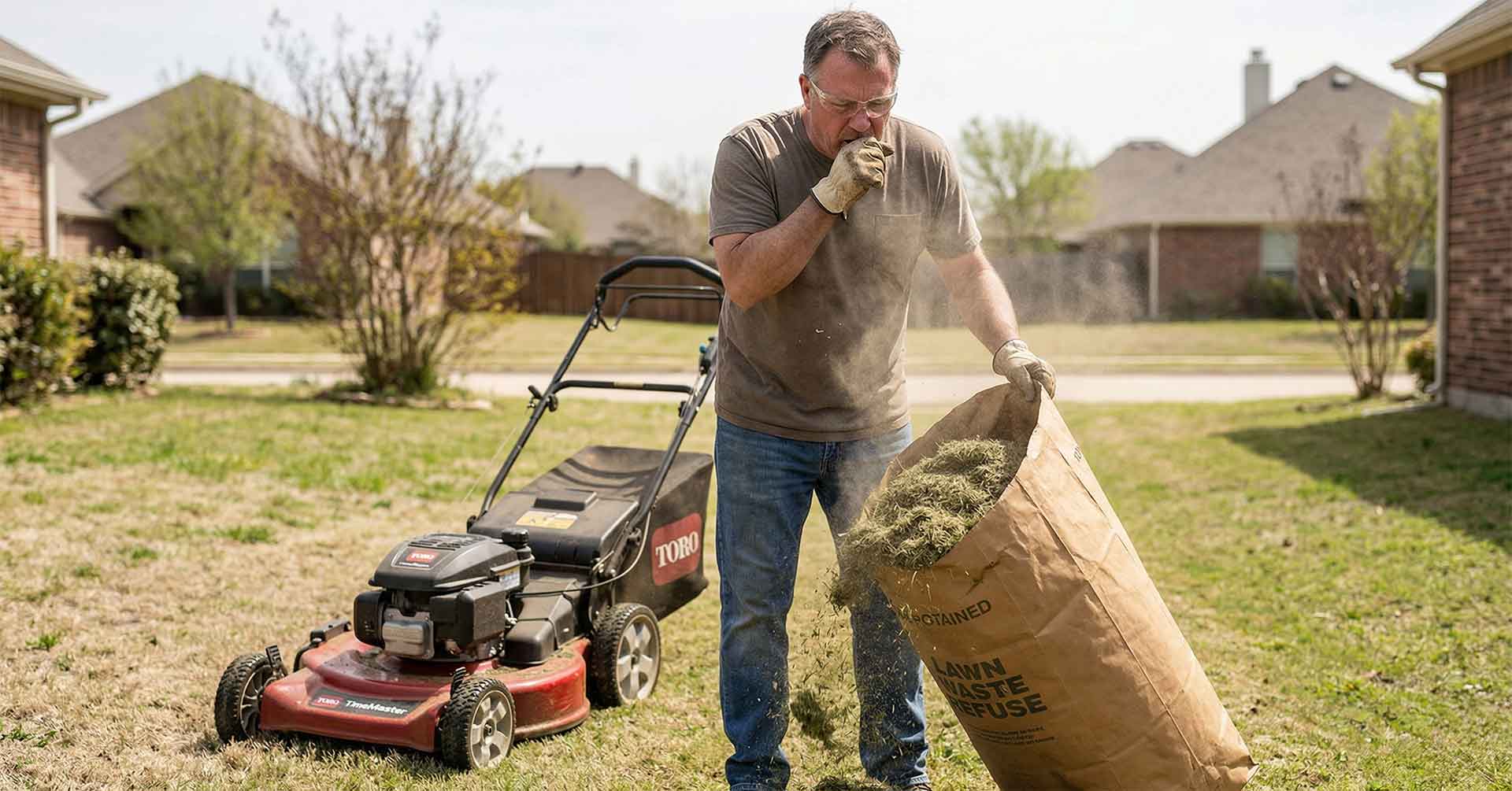
While mulching is the gold standard, spring in North Texas occasionally throws curveballs that make bagging the better option. You should attach the bagger if you are dealing with:
1. You Missed a Mow (or Two)
If spring rains kept you from mowing and your grass has grown out of control, you need to bag it. Mulching extremely tall grass will leave thick, heavy clumps of clippings across your yard. These clumps block sunlight, trap excess moisture, and will smother and kill the grass underneath.
2. Weeds Are Going to Seed
Late March and April are prime time for winter weeds (like Poa annua or rescuegrass) to drop their seeds. If your yard is currently fighting a heavy weed infestation and the seed heads are visible, bagging your clippings can help prevent spreading those seeds all over your lawn.
3. You Spot Lawn Disease
With spring moisture comes the risk of fungal diseases like Brown Patch or Take-All Root Rot, which are common in St. Augustine grass. If you notice diseased patches, bag your clippings to avoid spreading the fungus to the healthy areas of your yard.
The Bottom Line for Spring
For 90% of your weekly mows this season, take the bag off and let those clippings feed your lawn. Just remember to stick to the 1/3 rule (never cutting off more than one-third of the blade at a time) and keep your mower blades sharp to ensure those clippings break down quickly and efficiently!