It’s a frustrating sight: a broken sprinkler head after a fresh mow. But before you blame the crew, let’s look at the "why." Discover the common irrigation deficiencies that lead to mower damage and how you can fix them.
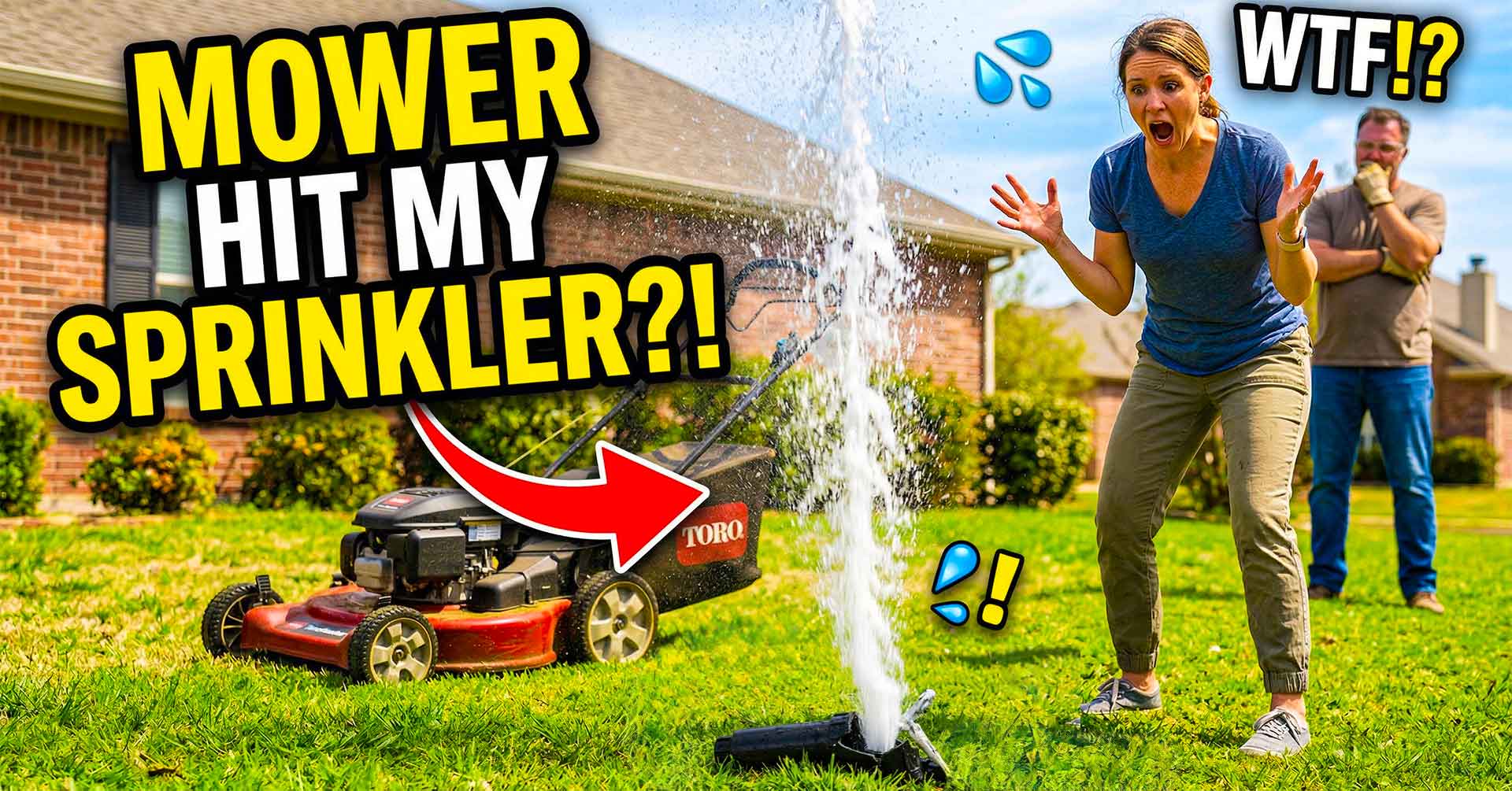
It’s a classic spring scenario in DFW: your lawn looks great after a fresh mow, but as the sun sets and your irrigation kicks on, you see a geyser shooting ten feet into the air. A sprinkler head has been hit.
The natural reaction is to assume the mowing crew was careless. However, in the vast majority of cases, a broken head isn't a result of poor mowing—it’s a symptom of a system deficiency. As your lawn enters the peak growing season, it’s important to understand why this happens and how to prevent it.
The "High Head" Problem
The most common reason a mower hits a sprinkler is that the head is sitting too high. Over time, North Texas soil shifts (especially our famous clay). This shifting, combined with the natural buildup of thatch and soil around the head, can cause a sprinkler to "heave" upward.
If a head doesn't retract fully or was installed slightly above the soil grade, it sits directly in the path of the mower’s steel blades. Even the most skilled operator cannot avoid a head that is protruding into the grass canopy.
Worn Out Springs and "Pop-Up" Failure
Sprinkler heads are mechanical devices with internal springs. After years of enduring the Texas heat, these springs weaken.
When the system turns off, a healthy head should snap back down flush with the ground. A "tired" head stays popped up an inch or two. When the mower comes by a few days later, that protruding plastic is easily clipped. If your heads aren't retracting fully on their own, they are essentially "sitting ducks."
Why It’s a System Deficiency
Commercial mowers are heavy, powerful machines designed to maintain a consistent cut height—usually 2.5 to 3.5 inches for Bermuda and St. Augustine this time of year. For a mower blade to strike a head, that head must be sitting higher than the grass being cut.
When professional home inspectors or licensed irrigators evaluate a system, a sprinkler head that is too high or fails to retract is officially labeled a deficiency. This isn't just a minor annoyance; it is an installation or maintenance flaw in the irrigation system itself. In the eyes of a professional inspector, the "guilty party" isn't the mower—it's the malfunctioning head that failed to get out of the way.
What You Can Do as a Homeowner
The good news? This is a fixable problem that will save you money and water in the long run.
- The "Step" Test: Safely walk your zones while they are off. If you feel a hard plastic "thump" under your shoe, that head is too high and needs to be lowered or reset.
- Clear the Thatch: Ensure grass hasn't grown over the top of the head, which can prevent it from retracting.
- Install "Funny Pipe": If you have heads that constantly shift, consider having them reinstalled using flexible "funny pipe." This allows the head to move slightly if a mower or foot hits it, rather than snapping the PVC pipe below.
- Check Your Springs: If you see heads staying up after the zone finishes, it’s time to replace the internal guts of that sprinkler.
By addressing these small system flaws now, you can enjoy a beautifully manicured lawn without the "geyser" surprises!