Get your North Texas lawn ready for the growing season. This actionable 5-step guide covers everything from the crucial "spring scalp" and first regular mow, to timing your pre-emergent for effective weed prevention. Ensure your residential DFW property is the healthiest on the block.
The first signs of spring are visible in North Texas. The crape myrtles are budding, the wildflowers are starting to dot the roadsides, and, if you look closely, that sea of dormant, brown grass is about to transform into a vibrant, lush green.
This transition is exciting, but it’s also a critical time for residential lawn maintenance in DFW. What you do in the next few weeks—specifically your mowing, scalping, and weed prevention—sets the foundation for the health and beauty of your lawn for the rest of the year.
If you are aiming for that thick, healthy, and weed-free turf, here are the 5 essential steps you must take to wake up your North Texas lawn right now.
1. Clean the Slate: Debris Removal
Before you can start any heavy work, you must remove the remnants of winter. North Texas winters often leave lawns covered in a layer of debris.
Why It’s Crucial:
A layer of old leaves, fallen branches, and general clutter does more than look messy; it can suffocate your lawn. Debris blocks sunlight, which is necessary for the soil to warm up and trigger early growth, and it creates damp conditions that encourage fungal diseases like Brown Patch.
Action Item:
- Perform a thorough walkthrough of your entire property.
- Rake and remove all leaves.
- Pick up fallen branches, twigs, and acorns.
- Clearing the surface now allows for an even cut and ensures that your upcoming fertilizer and pre-emergent applications reach the soil directly.
2. Master the "Spring Scalp" for Bermuda Lawns
If your DFW lawn is primarily Bermuda grass (the most common type for sunny properties in North Texas), "scalping" or a "Mow Low and Bag" is perhaps the most important first mow you can do.
Why It’s Crucial:
Bermuda is a warm-season grass that grows from the roots up. When it goes into winter dormancy, the old, brown leaf blades act as a protective layer. In spring, however, this brown thatch is a liability. It insulates the soil from the sun’s warmth, delaying the "green-up." It also prevents water and nutrients from reaching the roots.
Action Item:
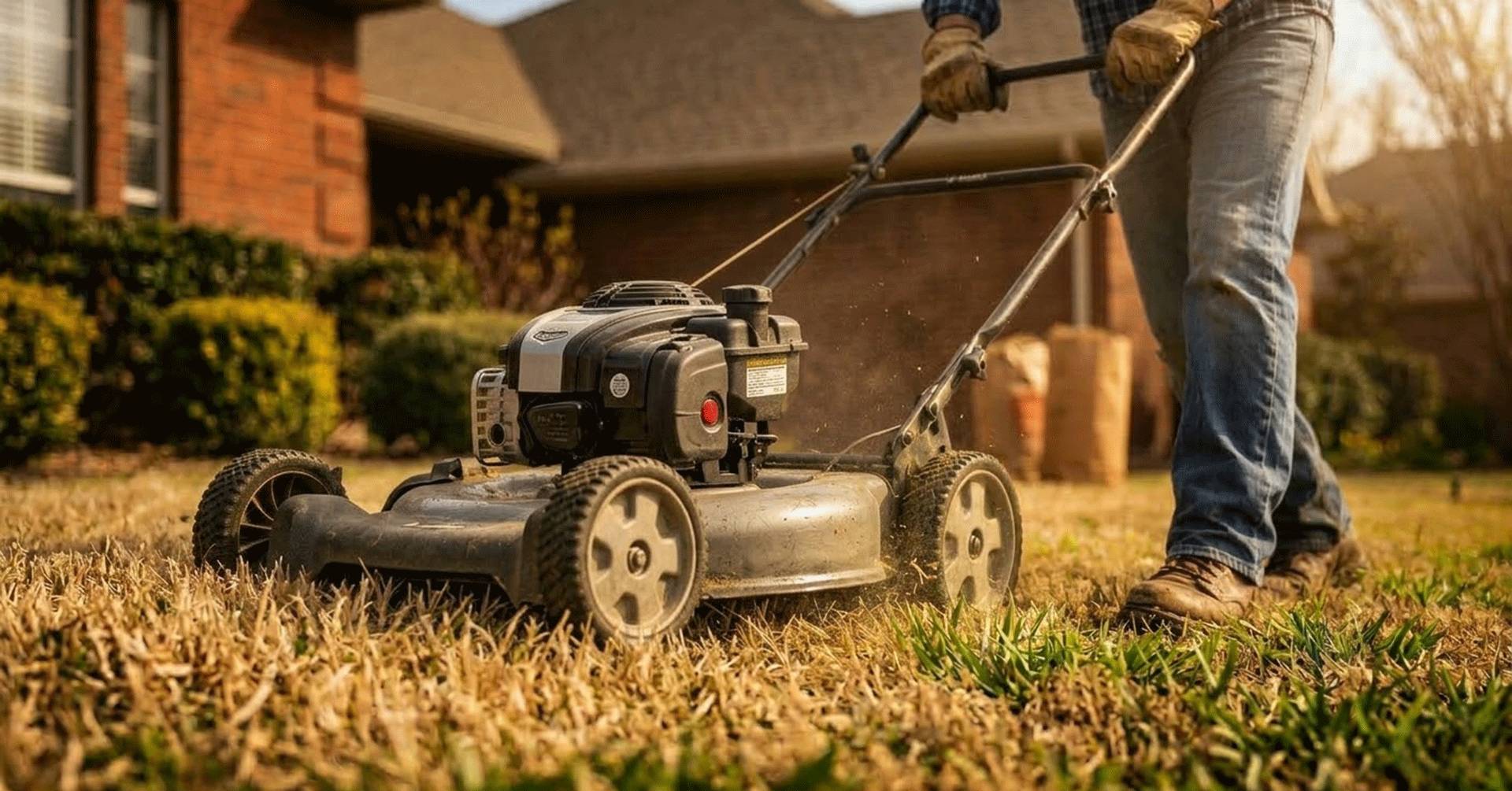
- Set your lawnmower to its lowest possible setting without the blade hitting the soil.
- Mow your entire lawn at this low height.
- Crucial: This is one of the only times you should bag your clippings in Texas. You need to remove this brown "trash" from the lawn completely.
- This removes the old thatch, allows the sunlight to warm the soil quickly, and makes room for the new, green growth to emerge.
3. Apply the First Pre-Emergent for Early Spring Weeds
Weed control in North Texas is primarily about timing, and for many spring weeds, that time is now.
Why It’s Crucial:
The "early spring" application of pre-emergent herbicide is designed to create a "barrier" in the top layer of the soil that prevents summer annual weeds—like Crabgrass and Sandbur—from germinating in the first place. You must apply this before the soil temperatures reach about 55°F consistently for several days, which usually occurs in the DFW area between mid-February and early March.
Action Item:
- Verify your grass type. Pre-emergents are safe for most common DFW grasses like Bermuda, Zoysia, and St. Augustine, but always check the label.
- Apply a quality granular or liquid pre-emergent herbicide.
- Pro Tip: Your target for this specific application is weeds that germinate later in spring. For the green, non-grass weeds you can see right now (like Henbit and Dandelion), you would use a post-emergent spot treatment. Pre-emergent must be applied early to work.
4. Inspect Your Irrigation System for Spring Readiness
It might seem early, but you don’t want the first hot, dry day in May to be the time you discover your irrigation system has a major leak.
Why It’s Crucial:
Drought stress is the primary cause of major lawn issues in Texas. Early spring is the best time to run a complete audit, while the demand for water is low and the weather is pleasant enough to perform repairs.
Action Item:
- Run each zone of your sprinkler system manually.
- Look for:
- Broken or clogged heads.
- Misting/High Pressure: This suggests heads are operating incorrectly, causing water to evaporate.
- Geysers: This indicates a missing nozzle or broken head.
- Damp, Soft Spots: This signals a leak in the underground line.
- Adjust the heads to make sure they are irrigating the lawn, not the sidewalk, fence, or street.
5. Plan Your Later Spring Preparation: Aeration & Mulch
The final step is preparing for the jobs that follow the initial green-up. Your lawn and landscape will have two more major needs as spring moves into high gear.
Action Item:
- Aeration Planning: For properties with heavy, compacted clay soil (very common across North Texas), core aeration is a must-do in the late spring (late April through May). This involves removing small plugs of soil, allowing oxygen, water, and nutrients to penetrate deep into the root zone.
- Fresh Mulch for Beds: Apply a new 2-to-3-inch layer of hardwood mulch to all garden and foundation beds. Mulch is essential for North Texas landscapes; it conserves soil moisture, which drastically reduces your irrigation need, while also suppressing weeds. Do this now, before the heat truly arrives.
By following these 5 steps in early spring, you are setting your residential property up for a healthy, vibrant, and resilient growing season. Happy mowing!