Egrets nesting near the John and Judy Gay Library in McKinney? While a fascinating wildlife sight, their nesting colonies present strict federal legal constraints and serious turf chemistry hazards for local homeowners. Here is the Mowing Best guide to understanding the Migratory Bird Treaty Act, managing client expectations, and repairing severe lawn guano damage.
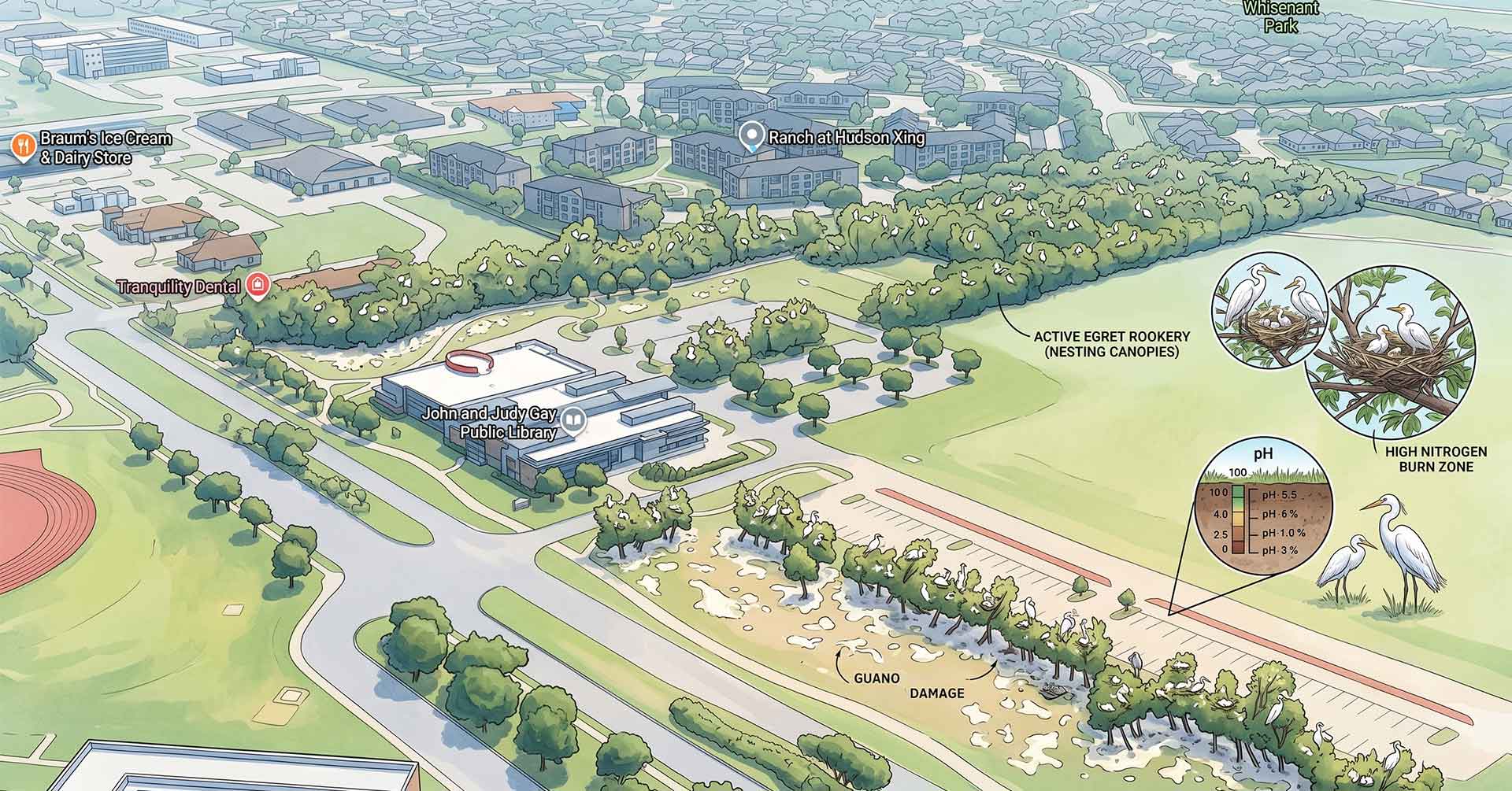
If you take a stroll past the John and Judy Gay Library in McKinney right now, you will witness one of nature's most dramatic annual spectacles. Thousands of migratory egrets and herons have established their nesting colonies (known as rookeries) high up in the local tree canopies. While wildlife enthusiasts flock to community presentations to observe these birds in balance, residential property owners living underneath these active flight paths are facing a completely different reality: a severe agronomic crisis.
Every summer, our team at Mowing Best hears of frustrated homeowners in Collin County whose pristine St. Augustine and Bermuda grass lawns are quite literally under siege. Between the deafening noise, intense odors, and a steady downpour of highly concentrated bird droppings, keeping a North Texas yard alive becomes an uphill battle during the peak heat of the season.
The Agronomic Breakdown: Guano vs. Grass
To understand why your turf is yellowing, scorching, and dying beneath an active nesting site, we have to look directly at soil chemistry. Bird guano is packed with hyper-concentrated nitrogen and phosphorus. In small, controlled amounts, organic matter is beneficial for our heavy Blackland Prairie clay soil. However, an entire colonial rookery creates a massive, continuous chemical overdose that causes severe damage:
- Severe Nitrogen Burn: The sheer volume of uric acid in the droppings creates an acute "fertilizer burn." It strips moisture away from the grass blades, completely scorching the foliage down to the stolons and crowns.
- Soil Acidification: Sustained guano exposure drops the pH of our naturally alkaline DFW soil into an intensely acidic range. This sudden shift locks up vital micronutrients and kills off the beneficial soil microbes necessary for root health.
- The Canopy Shade Shift: Egrets physically break limbs to construct their nests, altering the structure of your trees. This thins out the canopy unevenly while blocking out the clean sunlight required for warm-season turf recovery.
The Landscaper’s Friction Point: Navigating Federal Law
This local phenomenon highlights one of the biggest operational friction points in the professional landscape industry: managing furious client expectations vs. adhering to federal environmental mandates. When a homeowner looks out and sees their expensive landscaping dying, their immediate reaction is to tell their lawn service provider: "Get out here, trim these branches back immediately, and clear these birds out!"
However, as professional service providers, we are legally bound by the Migratory Bird Treaty Act of 1918. This strict federal statute protects native migratory waterbirds. The moment a sentry bird builds a nest and a single egg is laid, it becomes a federal crime to disturb, harass, relocate, or alter the nesting habitat. Neither your lawn crew nor the city management can touch those tree canopies until the fledglings leave and the birds naturally migrate in late summer.
For any landscape businesses, this article serves as your best client education tool. Instead of getting into a defensive argument with a frustrated customer about why you cannot trim their oaks or elms in July, share this guide to establish the legal parameters clearly and pivot the conversation toward a comprehensive post-migration soil remediation plan.
The Actionable Playbook: Surviving and Repairing the Damage
Since we are currently in the middle of summer peak nesting activity, your immediate options are limited to passive defense. The heavy recovery work begins the moment the rookery empties out. Here is our step-by-step seasonal remediation plan for North Texas lawns:
- Active Root Flushing (Right Now): While you cannot touch the tree canopy, you can protect the root zones of your grass. Run your irrigation system or manually hose down the affected turf for brief, frequent cycles. This dilutes the accumulated uric acid and washes the concentrated salts past the delicate root system. Ensure your sprinkler heads are fully operational and haven't been broken by falling debris or low-hanging limbs.
- Post-Migration Debris Removal (Late Summer): As soon as the birds migrate, immediately clean up all fallen nesting materials, deadwood, and organic waste from the lawn. Always bag these materials and remove them from the property; do not mulch them back into your turf layout.
- Soil Remediation & pH Balancing: Conduct a thorough soil test to assess exactly how far your pH has dropped. Apply a targeted application of agricultural lime topdressing to neutralize the localized soil acidity and restore chemical equilibrium to our heavy clay bases.
- Core Aeration and Turf Reset: Core aeration is absolutely vital to break up the compacted clay and hardened guano crust, allowing oxygen, water, and neutralized nutrients to reach suffocating roots. If your St. Augustine or Bermuda grass has suffered total crown death, the early autumn window is the perfect time to cut out the dead patches and lay fresh local sod so it can establish deep roots before winter dormancy arrives.