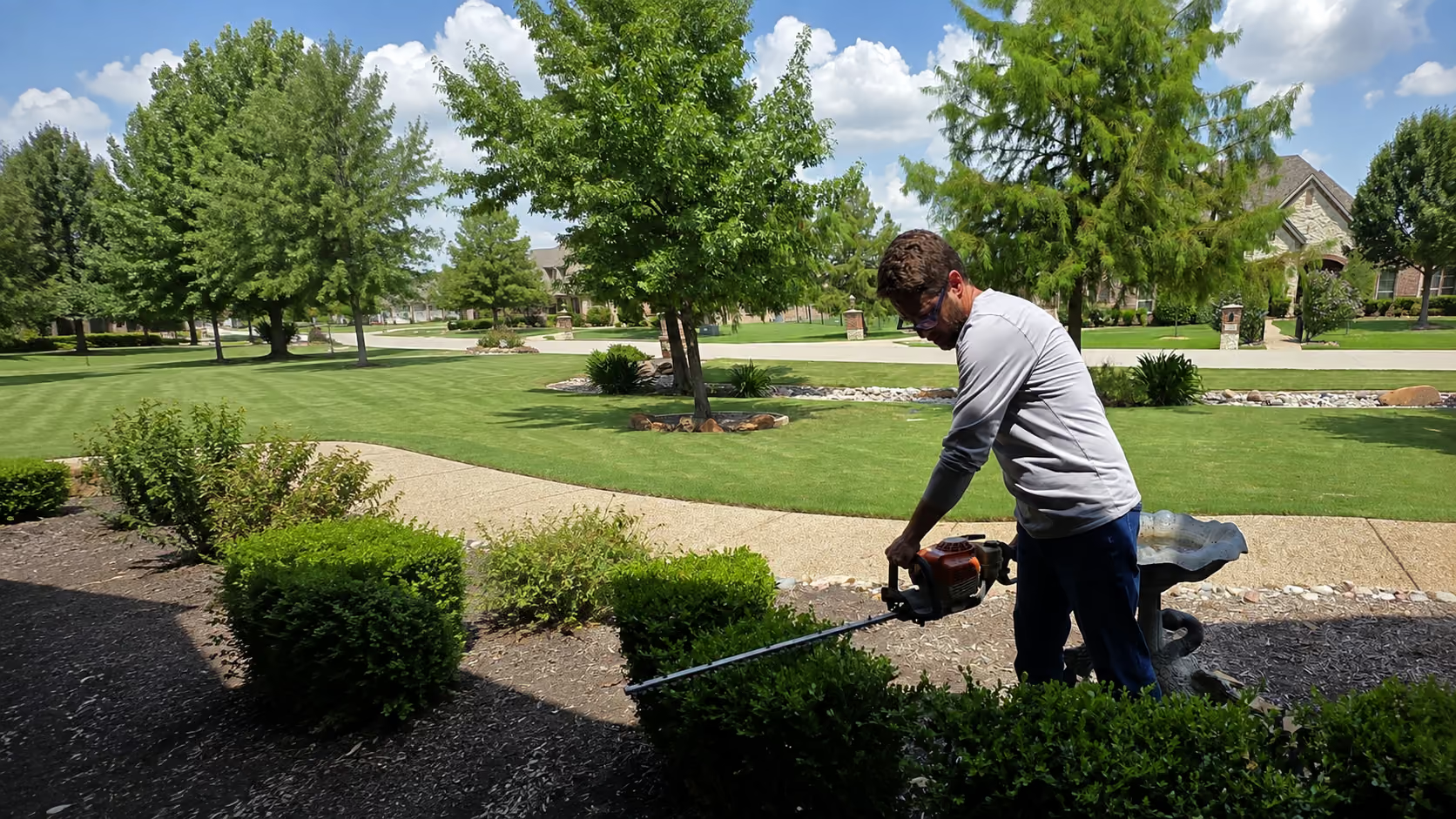
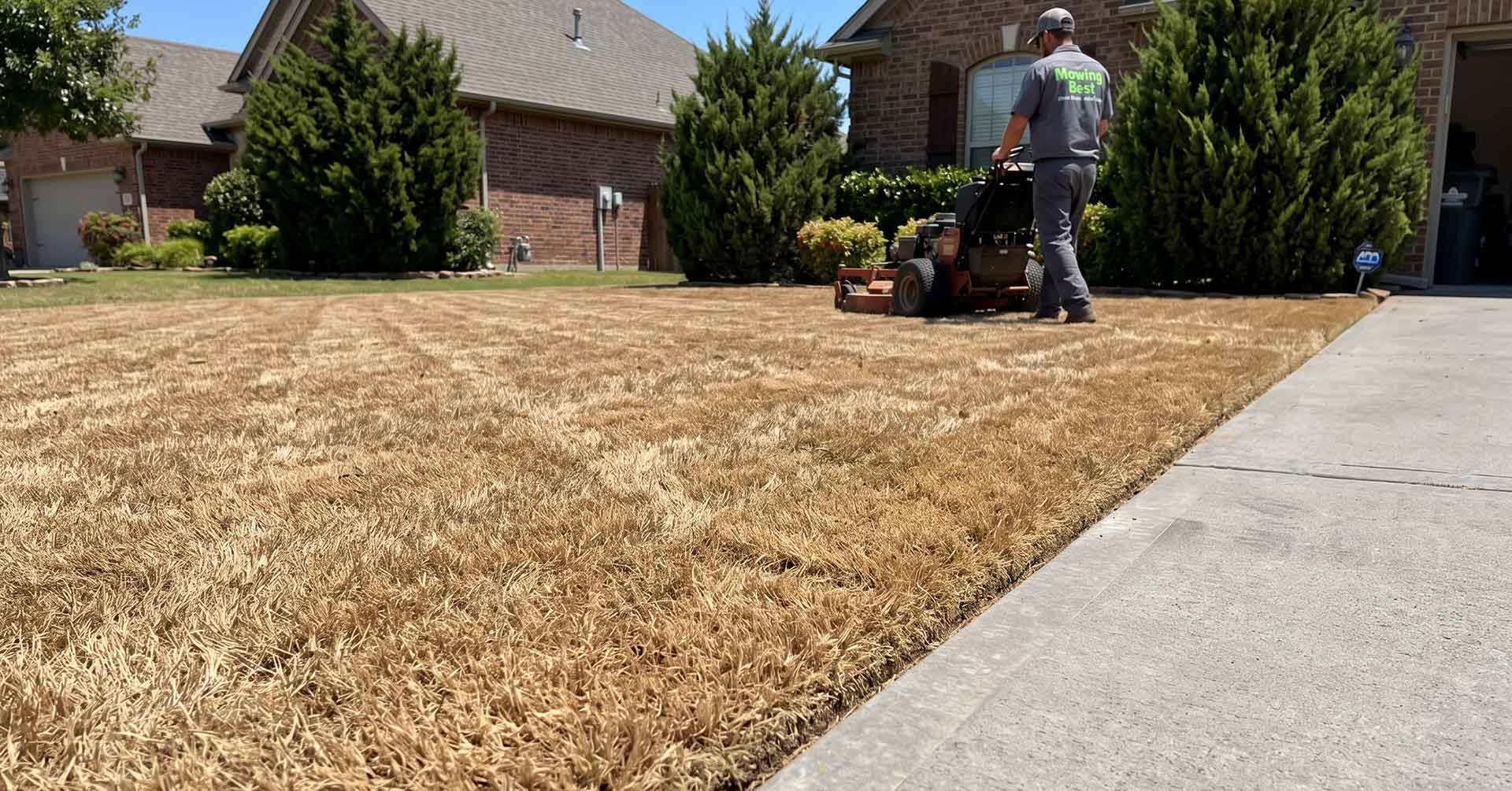
Bermuda grass turns straw-brown during summer dry spells as a natural defense mechanism called drought dormancy. Learn how to tell if your turf is truly dead, how survival watering keeps roots alive, and why continuing regular mowing during drought prevents weed overgrowth and preserves curb appeal.
When summer heat peaks and rain disappears, Bermuda grass does something remarkable: it shuts down to protect itself. That dull straw-brown color isn't necessarily a sign of a dead lawn—it's a natural defense mechanism called drought dormancy.
Dormant vs. Dead: How Warm-Season Turf Survives
Bermuda grass is built for extreme heat. When soil moisture drops, the plant pulls water and energy out of its leaves and redirects focus entirely to its root system. The top layer turns brown, but the crown and roots remain alive underground waiting for moisture.
- Drought Dormancy: Bermuda can safely sit in a brown, dormant state for 3 to 4 weeks without permanent injury.
- When It Actually Dies: If a lawn goes 5 to 8+ weeks without a single drop of water or rainfall during severe heat, the root crowns finally dehydrate and die.
- The Tug Test: Grab a handful of brown grass and pull gently. If it holds firm into the soil, the root system is alive. If it pulls up effortlessly with zero resistance like loose straw, those shoots have died.
- The Crown Check: Part the brown grass blades and look at the soil line. If the crown (the base of the stem) is firm and shows a hint of white or light green tissue, the plant will rebound quickly once watered.
The "Survival Watering" Strategy
If watering restrictions or high utility bills keep you from irrigating continuously, you don't need to drench the lawn to keep it alive. Applying a "survival watering"—just half an inch of water every 2 to 3 weeks—is enough to keep the root crowns hydrated underground without forcing the grass into an expensive, temporary green spurt. This minimal moisture protects your turf from transitioning from dormancy to permanent damage while natural rains are sparse.
Why Mowing During Drought Is Still Critical
It might feel counterintuitive to run a mower over a brown lawn, but pausing service during drought usually causes bigger problems down the road. Regular maintenance during dormant periods serves four major purposes:
- Opportunistic Weed Control: While Bermuda goes to sleep, heat-hardy weeds (like crabgrass, spurge, and nutsedge) thrive in dry weather. Mowing keeps weeds from taking over, flowering, and dropping millions of seeds into your turf.
- Knocking Down Seed Heads: Stressed Bermuda grass often sends up unsightly, jagged seed heads in a last-ditch effort to reproduce. Scheduled cuts keep these uniform and clean.
- Maintaining Curb Appeal: A neatly edged, evenly trimmed brown lawn looks intentional and well-kept. An untrimmed brown lawn with tall weeds along the driveway looks neglected.
- Preventing "Rain Explosion" Shock: When summer rains return, dormant Bermuda wakes up overnight. If the lawn was left unmaintained for weeks, the sudden surge of growth leads to scalping, clogged mower decks, and severe turf stress. Maintaining the canopy height keeps the lawn ready for a seamless green-up.
How We Adjust Our Service During Dry Spells
We don't cut dormant grass the same way we cut actively growing turf. During drought conditions, our crews adjust blade heights higher to minimize friction stress, focus heavily on crisp detail work (edging, trimming, and blowing), and target rising weed stalks so your property stays sharp until the rain returns.