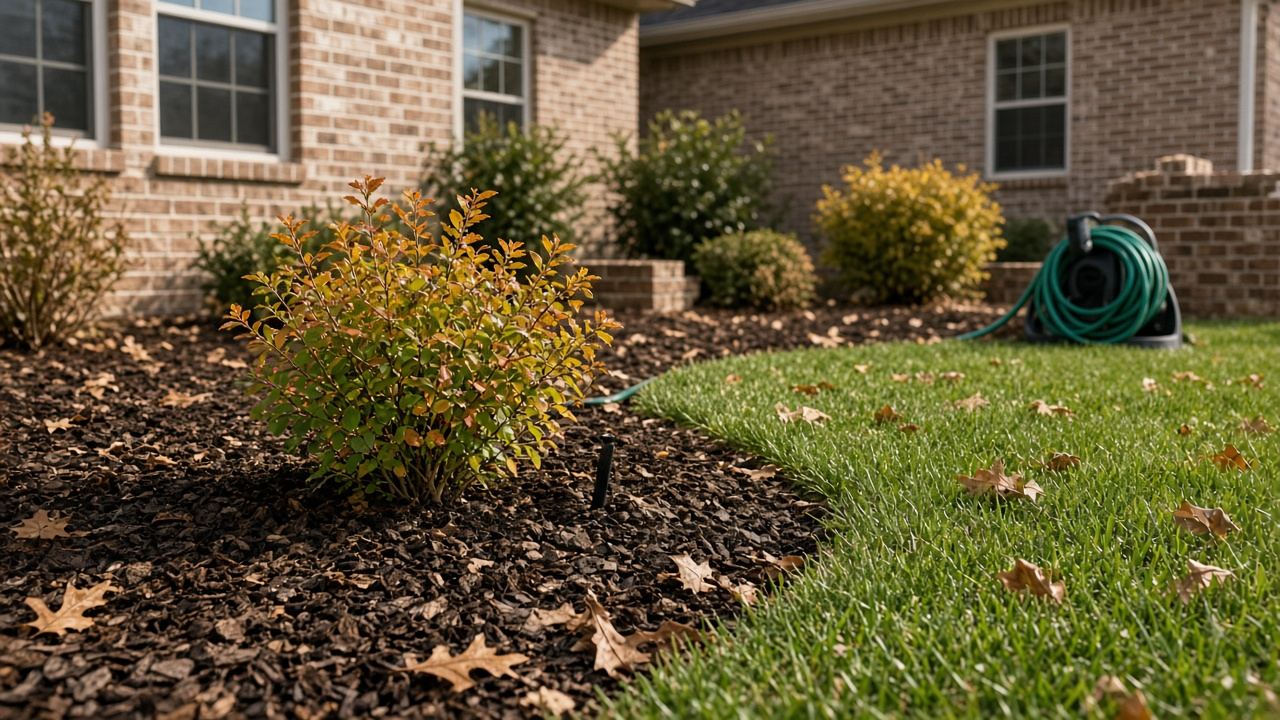
Fall isn't too late to plant in DFW. It's usually the best time: warm soil grows roots while cool air cuts stress, so shrubs get months to settle in before summer.
Once the grass starts going tan in November, a lot of North Texas homeowners put the yard on hold: "We'll plant in the spring." It feels like the safe choice. In DFW, it's usually backwards.
Short answer: no, fall isn't too late. Fall is usually the best time to plant trees and shrubs in North Texas. Texas A&M AgriLife has been telling Texans for years that "fall is for planting," and it holds up in Frisco, McKinney, Plano, and Allen yards just as well as anywhere in the state.
Why fall planting works in DFW
When you plant a shrub, it needs to grow new roots out into the surrounding soil before it can handle stress. Fall gives it the best shot at that:
- The soil is still warm. Roots keep growing in warm soil even after the air cools off and the top of the plant slows down.
- The heat is gone. A shrub planted in April or May has only a few weeks before 95-plus degree days. A shrub planted in November gets months of mild weather to settle in.
- Less water is needed. Cooler days mean the plant loses less water through its leaves, so it isn't fighting to keep up.
By the time summer arrives, a fall-planted shrub has a head start on roots. A spring-planted one is still trying to establish itself in the hottest part of the year.
Fall planting vs. spring planting at a glance
| Planted in fall | Planted in spring | |
|---|---|---|
| Time to grow roots before summer | Several months | A few weeks |
| Watering needed to establish | Lower, with help from cool weather and winter rain | Higher, especially once heat sets in |
| Heat stress in year one | Lower | Higher |
| Main risk | A hard freeze right after planting, so plant hardy, local picks | Drying out in the first summer |
How to plant a shrub the right way this fall
- Pick plants that are hardy here. Choose shrubs rated for North Texas winters. Save tender tropical plants for spring.
- Dig wide, not deep. Make the hole two to three times as wide as the root ball, but only as deep as the root ball. Roots spread out, not down.
- Keep the top of the root ball level with the ground. Planting too deep is one of the most common reasons new shrubs struggle in clay soil.
- Water deeply right away. Then water about once a week when it doesn't rain, more often in a warm, dry stretch. Check the soil with a finger before you water.
- Mulch two to three inches deep. Keep mulch pulled back a couple of inches from the stems so they don't stay wet.
- Skip the heavy fertilizer. A new shrub needs roots first. Pushing new leaf growth right before winter doesn't help it.
Keep new beds clean through winter
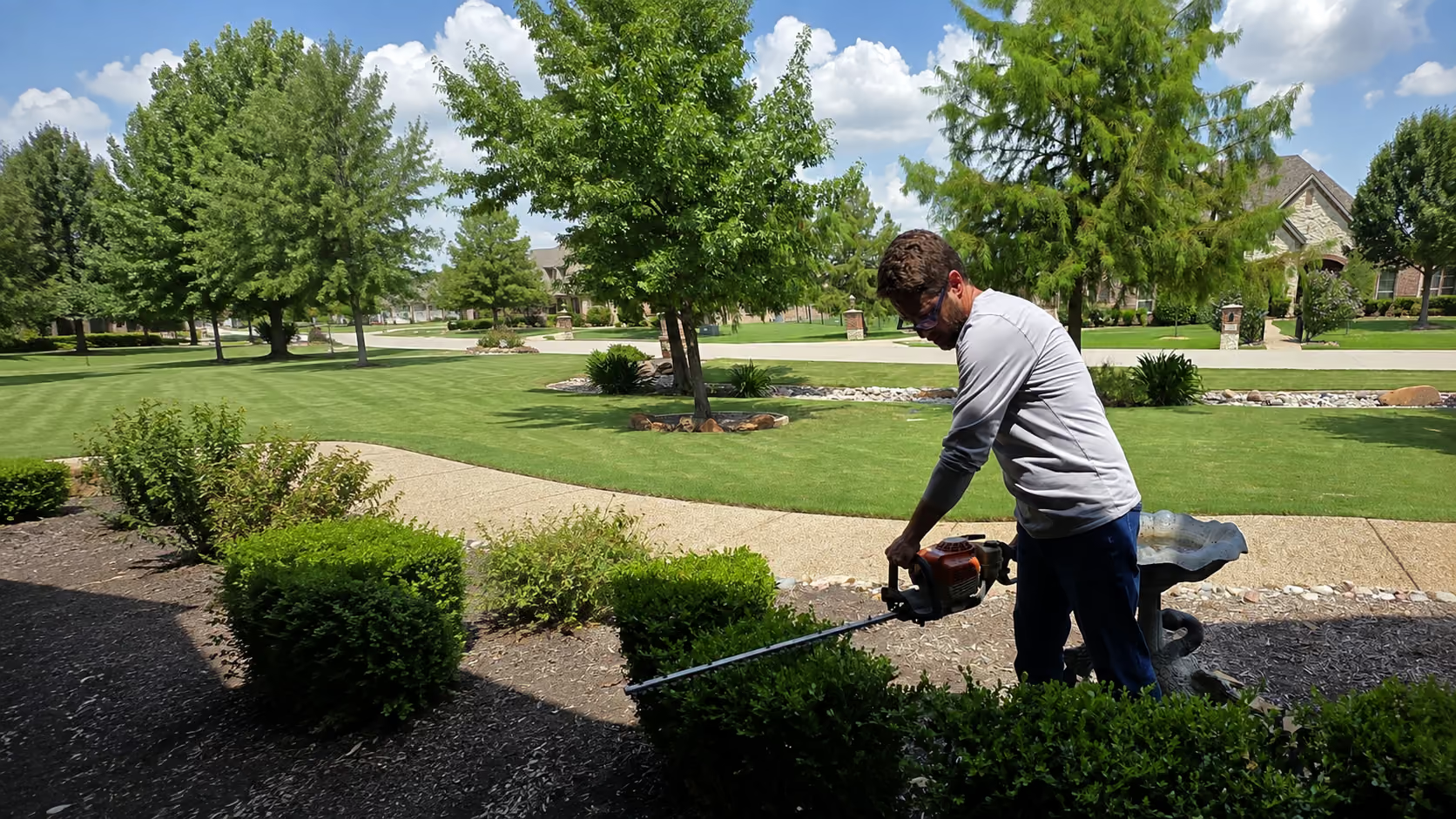
New beds and young shrubs are easy to damage. String trimmers and mower decks that get too close can scar thin bark and knock mulch into the lawn. A clean bed edge and a mower that stays on the grass protect the work you just did. Mowing Best crews mow around beds every visit, every other week in November and once a month from December through February, so new plantings keep a clean line all winter.
The bottom line
In North Texas, fall isn't the end of the planting season. It's the start of the best one. Plant hardy shrubs now, plant them at the right depth, water deeply, and mulch well, and they'll have months to grow roots before next summer's heat.
Want the mowing side covered while your new beds settle in? Mowing Best adjusts your visits to the season automatically. The best mow. Zero hassle.