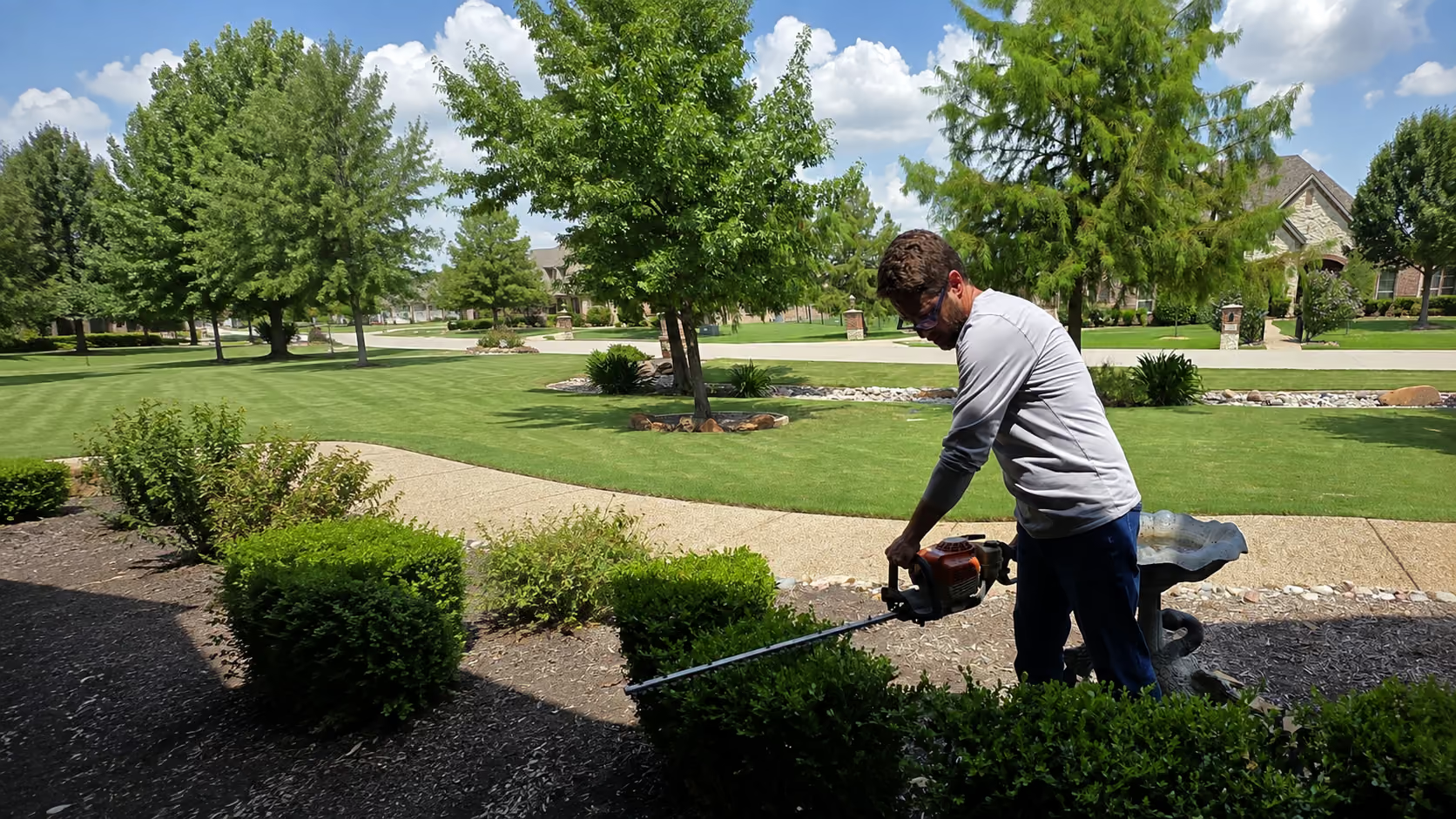
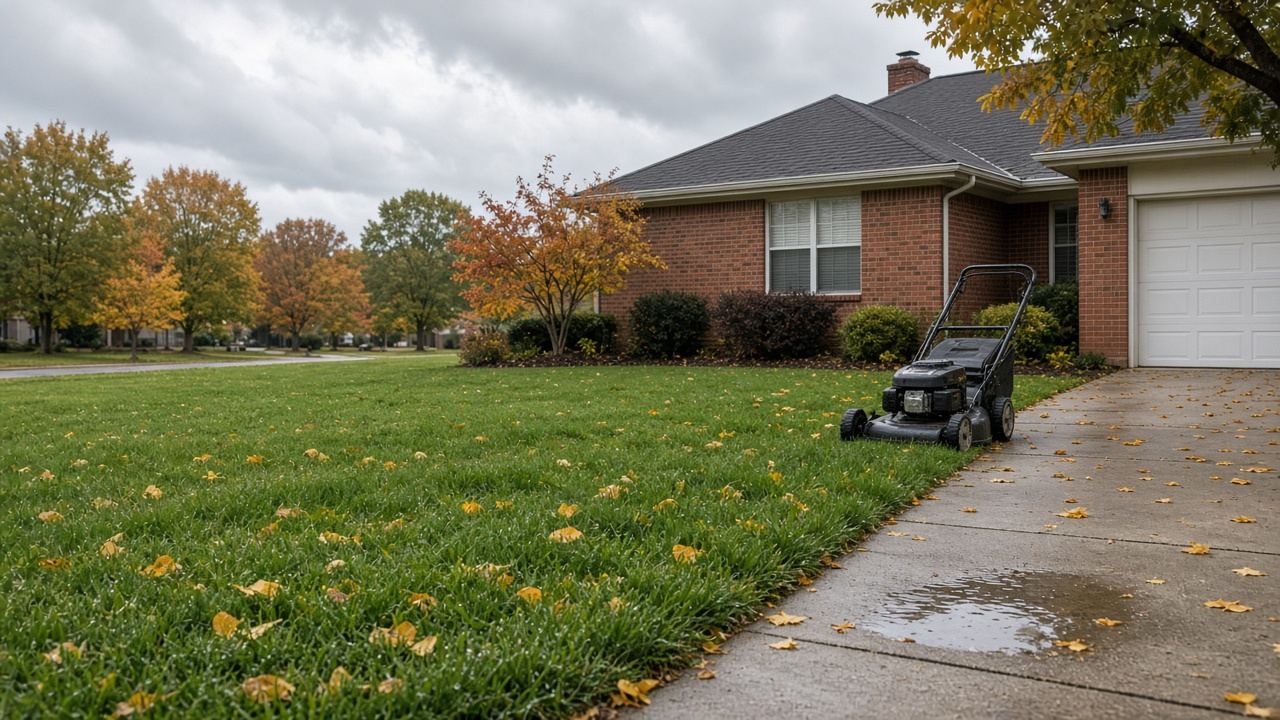
A little dew won't hurt your lawn, but soaked grass on North Texas clay leads to clumps, ruts, and torn tips. Here's how to tell when it's dry enough to mow.
October is one of the wetter months in Dallas-Fort Worth. A front rolls through McKinney, Frisco, Plano, or Prosper, drops an inch of rain overnight, and by morning the grass is still shining. So the question comes up every fall: is it actually bad to mow wet grass?
Short answer: a little dew is fine, but soaked grass and soft, squishy soil are not. Damp blades can still be cut cleanly with a sharp mower. Saturated turf on North Texas clay is where the trouble starts: torn grass, clumps, ruts, and a messier yard than if you had waited a day.
What "wet" really means for mowing
There are two different kinds of wet, and people mix them up.
- Wet blades: water sitting on the surface of the grass, like morning dew or the tail end of a light shower. The soil underneath is firm.
- Wet ground: the soil itself is saturated. Footprints squish, water sits in low spots, and the mower wheels sink.
Wet blades mostly affect how clean the cut looks. Wet ground affects the lawn itself, because heavy equipment on soft soil compacts it and can leave tracks that last for weeks.
The myth: "Mowing wet grass will kill your lawn"
It will not. A single mow on damp grass is not going to ruin a healthy Bermuda or St. Augustine lawn. The real problems are smaller and more practical:
- Uneven cut. Wet grass bends over under its own weight, so the blade skips some of it and the lawn can look streaky.
- Clumps. Wet clippings stick together and drop in piles instead of spreading out. Left sitting, heavy clumps can smother the grass under them.
- Ruts and compaction. North Texas clay holds water and stays soft long after the rain stops. Wheels press into it and leave tracks, especially along slopes and low spots.
- Torn tips. Wet grass is harder to slice cleanly, and a blade that is even a little dull will tear it instead.
- Spreading fungus. Cool, damp fall weather is when large patch shows up in St. Augustine lawns in DFW. Moving through infected, wet turf can carry it to new spots.
The opposite myth: "Never mow if there is any moisture at all"
Waiting for bone-dry grass in a wet October can mean skipping a week, and that has its own cost. Bermuda is still growing in fall, and letting it get too tall before the next cut means taking off more than a third of the blade at once, which stresses the lawn more than a slightly damp mow would. The goal is not perfectly dry grass. It is firm ground and blades that stand up.
| Condition | Mow? | Why |
|---|---|---|
| Light morning dew, firm ground | Usually yes | Surface moisture only. A sharp blade still cuts cleanly |
| Light shower ended a few hours ago | Usually yes | Blades dry fast once the sun and wind hit them |
| An inch or more of rain overnight | Often wait | Clay soil can stay soft for a day or longer |
| Squishy footprints or standing water | No | Wheels will rut and compact the soil |
| Thunder or lightning nearby | No | Safety first. Grass can wait |
The two-minute test before you mow
- Walk the lawn. If your shoes leave squishy prints or water rises around them, the ground is too soft.
- Check the low spots. Side yards, ditches, and the area near downspouts drain last.
- Look at the grass. If blades are lying flat and matted, give them a few hours to stand back up.
- Grab a handful. If water drips out when you squeeze, clippings will clump.
If you do mow damp grass
- Make sure the blade is sharp so it slices instead of tears.
- Slow down so the deck can keep up with the heavier grass.
- Skip the soggiest low spots and catch them on the next visit.
- Avoid tight turns on soft ground, which is where most ruts start.
- Break up or blow out any clumps so they do not sit on the turf.
How Mowing Best handles wet weeks
Mowing Best is a mowing company, and a steady weekly cut is the whole job. Damp grass with firm ground gets mowed. When a storm leaves a yard too soft to cut cleanly, it is better for the lawn to shift the visit than to tear up the turf just to stay on the calendar. If you have a question about a rain-affected visit, our team answers the phones 24/7.
Frequently asked questions
Is it bad to mow wet grass?
Mowing grass with light dew on firm ground is usually fine. Mowing soaked grass on saturated soil is what causes problems: an uneven cut, clumped clippings, ruts, and torn grass tips.
How long should you wait to mow after rain in North Texas?
After a light shower, a few hours is often enough. After an inch or more of rain, North Texas clay can stay soft for a day or longer. If footprints squish or water pools, wait.
Can mowing wet grass spread lawn disease?
It can. Fungal problems like large patch in St. Augustine are most active in cool, damp fall weather, and mowing through infected wet turf can carry the problem to other parts of the lawn.
Is morning dew too wet to mow?
Usually not. Dew sits on the surface of the blades while the soil stays firm. A sharp blade and a steady pace will still give a clean cut.
Bottom line: Wet blades are a nuisance. Wet ground is the real problem. Check the soil, not just the grass, and a damp fall morning will not hurt your lawn.