Notice your grass looking blonde and stalled out? Discover how drought dormancy works, the single-day cycle-and-soak watering schedule that wakes it up, and why September maintenance protects your curb appeal.
By the second and third weeks of September, North Texas lawns have endured nearly three straight months of 95° to 100°+ heat. If your yard has shifted from lush emerald to a pale, straw-like blonde and the grass blades seem to have stopped growing altogether, you are not alone.
Every year around this time, homeowners look at their stalled turf and wonder: "Is my lawn dead? And if it isn't growing, should I just pause or cancel my maintenance service until spring?"
Before pulling the plug on your yard's care, it helps to understand what is happening beneath the soil, how a single dedicated watering day can revive your turf, and why keeping your property manicured in September saves thousands in restoration costs come spring.
1. The Biology of "Blonde" Turf: Dormant, Not Dead
First, take a breath: your lawn is almost certainly not dead.
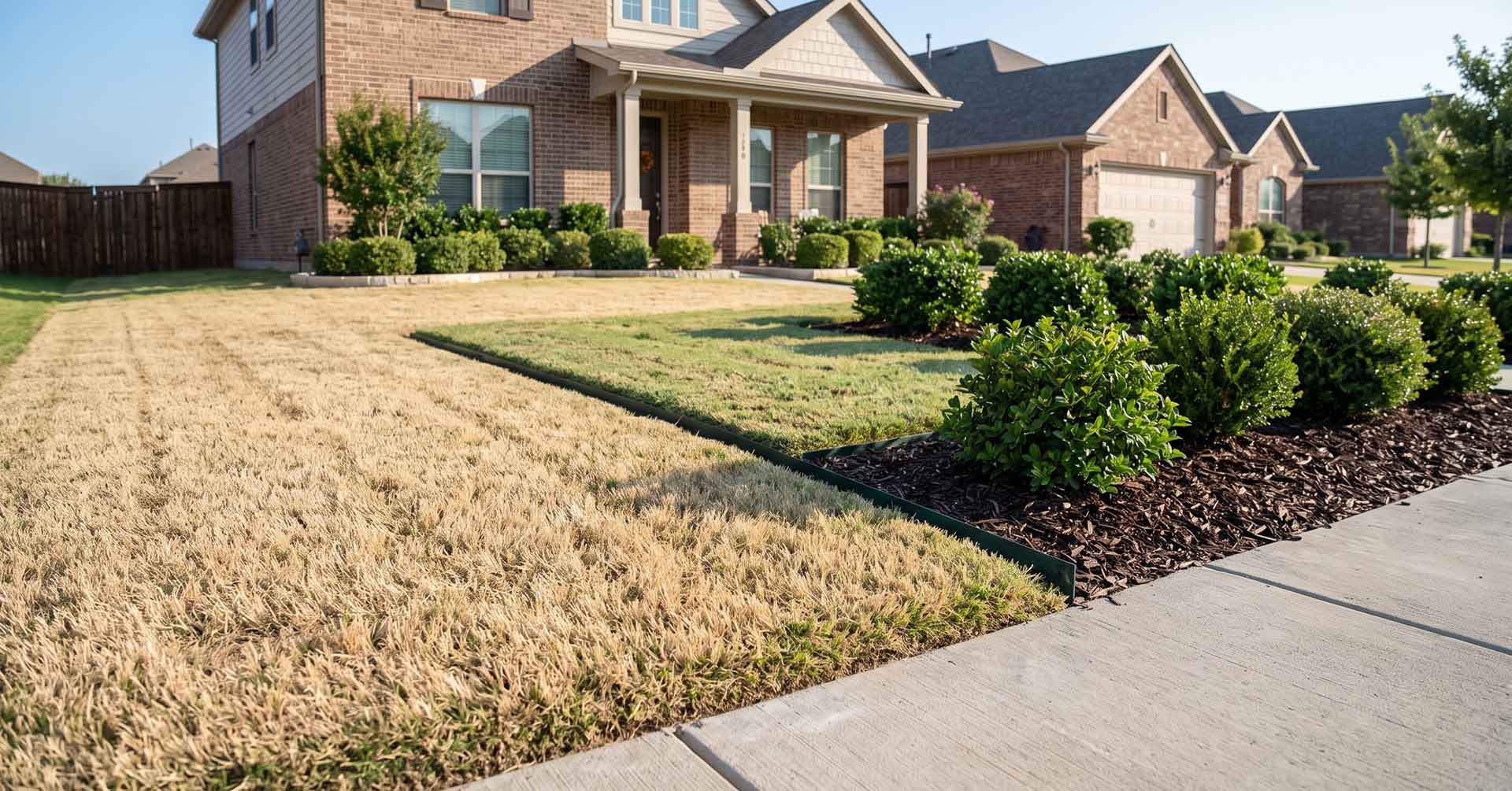
Our regional warm-season grasses—principally Bermuda, Zoysia, and St. Augustine—are evolutionary masters of heat survival. When high heat collides with strict watering restrictions and prolonged dry spells, warm-season turf protects itself by entering drought dormancy.
- The Survival Mechanism: The grass blade stops photosynthesizing, cuts off moisture to the upper leaf tissue (turning that familiar straw/blonde color), and pulls all remaining carbohydrates down into the root system and underground rhizomes.
- The "Tug Test": Want to verify your lawn is still alive? Reach down and grab a small handful of blonde grass near the soil line and pull. If it resists firmly and stays anchored in the dirt, the crown and roots are healthy and dormant. If it lifts up effortlessly like a loose toupee with rotted, brittle roots, only then is it dead.
2. The Danger of Canceling Service in September
When the mower isn't taking off two inches of top-growth every week, it's tempting to think maintenance isn't necessary. However, pausing service during September dormancy is one of the most expensive mistakes a homeowner can make.
Here’s why:
- Winter Weeds Don't Go Dormant: As nighttime temperatures begin to dip into the 60s and 70s over the next few weeks, summer turf stays quiet—but opportunistic winter weeds like Poa annua (annual bluegrass), henbit, chickweed, and rescuegrass begin germinating. An unkept, unmowed lawn provides the ideal sunlight and open canopy for weed seeds to establish massive root networks before winter.
- Runner Encroachment: Even when vertical growth slows, lateral Bermuda runners continue creeping aggressively across warm concrete, driveway seams, and into landscape beds. Missing a month of mechanical edging allows roots to anchor deep into concrete expansion joints, leading to cracked borders and hours of manual removal later.
- Property Curb Appeal: A dormant lawn with razor-sharp sidewalk edges, clean tree rings, manicured shrubs, and weed-free mulch beds looks intentional, upscale, and tidy. A dormant lawn left untrimmed with tall weeds poking through looks abandoned.
3. The Single-Day Watering Prescription: "Cycle-and-Soak"
Most DFW municipalities currently enforce once-per-week or twice-per-week designated watering schedules. Homeowners often try to compensate by running their zones for 30 or 40 continuous minutes on their allowed day.
In North Texas Blackland clay, this actually starves your lawn of water.
Our dense, heavy clay soil has an infiltration rate of less than 0.2 inches per hour. After just 6 to 8 minutes of continuous spray, the soil surface becomes sealed. Every gallon sprayed after minute eight simply runs down your driveway into the storm drain.
To break drought dormancy without wasting a drop of water or violating city ordinances, use the Cycle-and-Soak method on your designated watering day:
By breaking your watering runtime into three pulses an hour apart, 100% of the moisture sinks into the root zone where dormant grass crowns can drink it up. Within 7 to 10 days of this schedule, green shoots will begin emerging through the blonde canopy.
4. Shifting Focus: Fall Landscape Preparation
September is the official pivot point from summer survival to fall enjoyment. While your turf recovers, property maintenance shifts focus to protect your overall landscape investment:
- Flower Bed Detail: Keeping beds weeded and edged prevents Bermuda runners from stealing soil nutrients from perennials and ornamental shrubs.
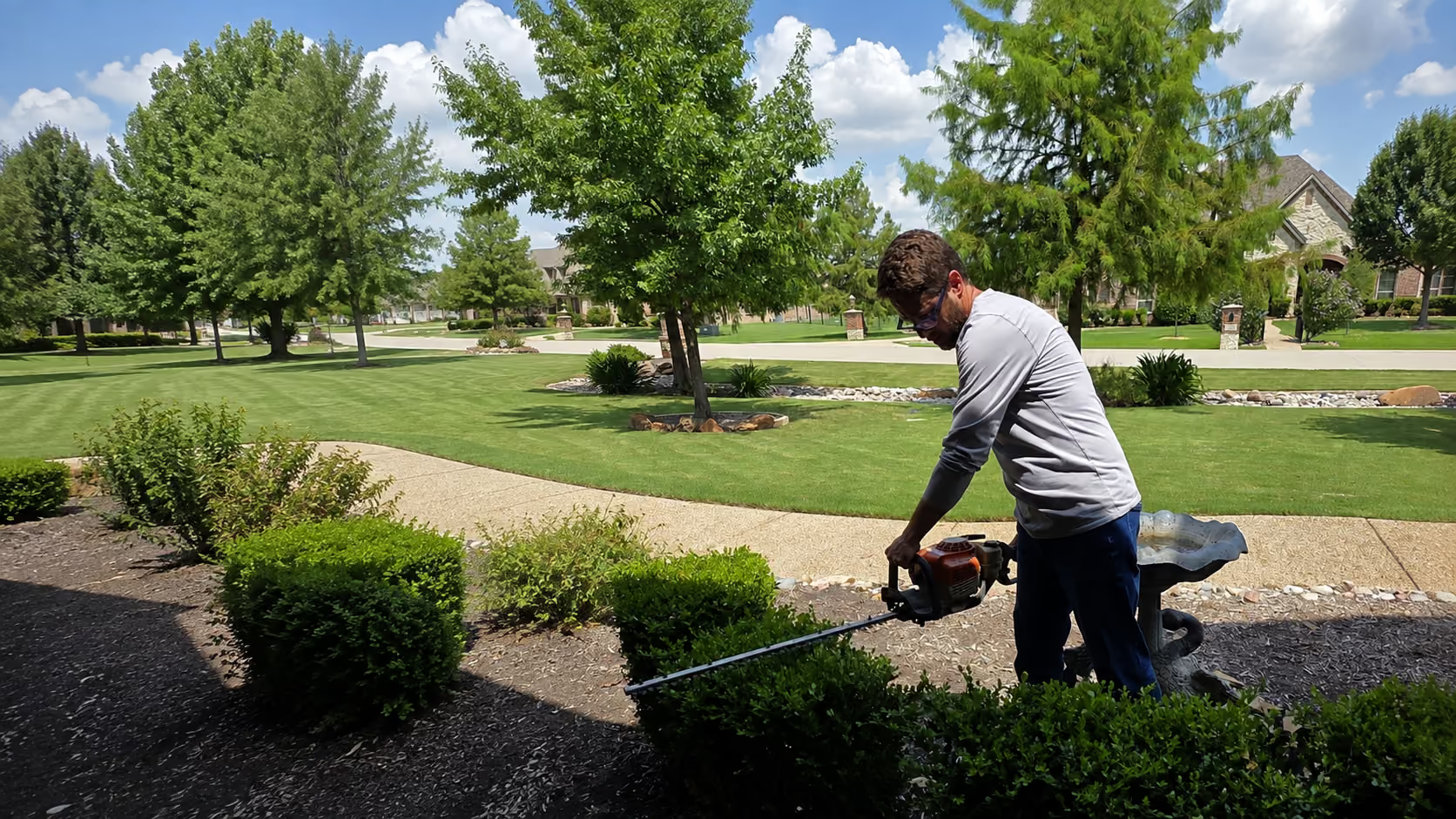
- Late-Summer Shrub Pruning: Cleaning up leggy growth on hedges and shrubs before the first frost strengthens branches and keeps your exterior looking polished.
- Mulch Insulation: Ensuring beds maintain a 2-to-3-inch layer of clean hardwood mulch protects shrub roots from early temperature drops and locks in moisture.
- Debris & Leaf Cleanliness: As trees begin shedding distressed summer leaves, regular weekly visits prevent heavy leaf layers from matting down over dormant turf and suffocating the grass crowns.
The Bottom Line: Partner With Us Through the Season
Your lawn has weathered the toughest stretch of the Texas summer. Keeping your regular maintenance schedule now ensures your turf boundaries stay crisp, cool-season weeds never get a foothold, and your landscape is primed to look its best as cooler patio weather arrives.
Please note: At Mowing Best, our crews specialize strictly in professional lawn mowing, precision edging, trimming, and landscape bed maintenance—we do not service, adjust, or program irrigation controllers.
You can easily enter this Cycle-and-Soak schedule into your existing controller settings yourself, or consult with a licensed local irrigator if you'd like a professional system tune-up. Meanwhile, our maintenance team will handle the mowing, hardscapes, and bed detailing to keep your property sharp, clean, and completely hassle-free all fall.