You do not need to bag every fall leaf on a Bermuda lawn in DFW. A light leaf layer can be mulched back into the turf; thick mats that smother grass should be cleared. Here is a simple mulch-vs-rake decision guide.
Short answer: No—you should not bag every fall leaf on a Bermuda lawn in DFW. Mulch the light stuff. Clear the mats. Leaves only become a problem when they smother the turf.
Early fall in North Texas is leaf season with a twist: Bermuda is still (or was recently) green while oaks and other trees start dropping. Homeowners often treat every leaf like a crisis. That creates extra work and sometimes removes organic matter the lawn could have used.
What leaf litter is doing on your lawn
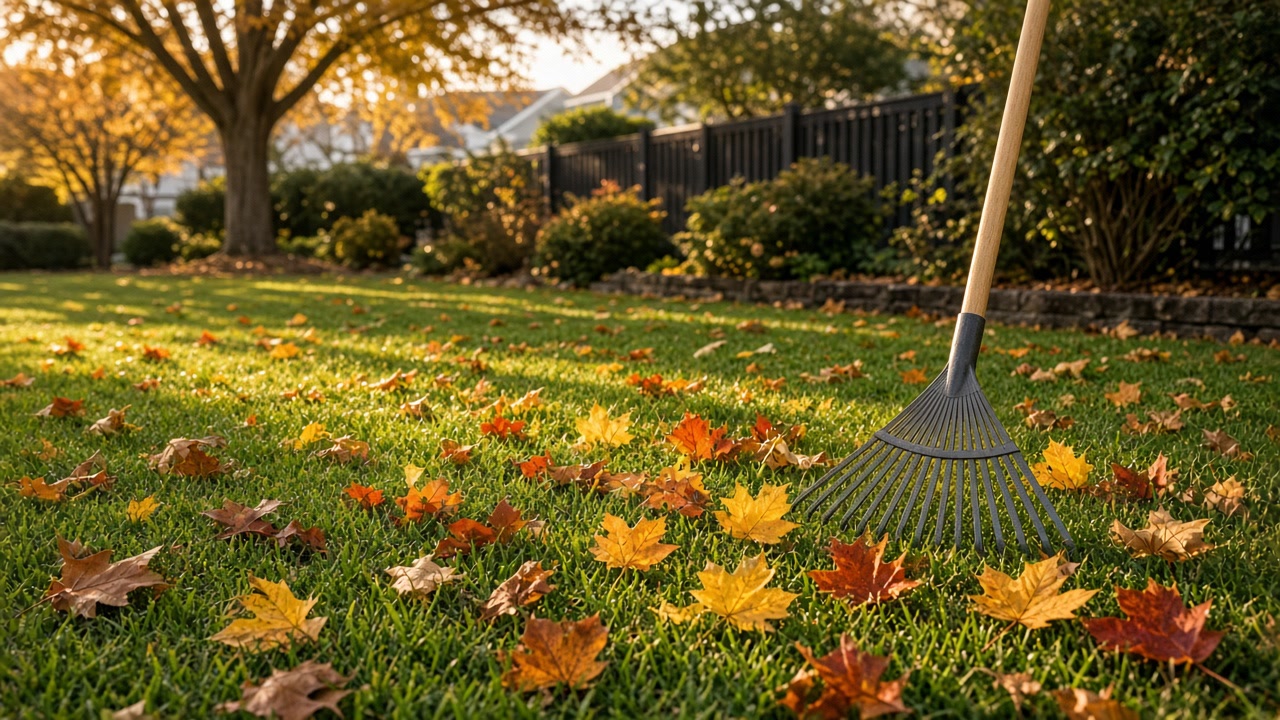
Leaf litter is fallen leaves sitting on the turf surface. A light layer is scattered coverage where you can still see plenty of grass. A smothering layer is a continuous mat—often wet and stuck together—where little to no green shows through.
Bermuda needs light at the canopy. It does not need a bare-dirt look every October afternoon. The goal is simple: keep leaves from blocking the grass for days at a time.
Mulch vs rake vs smother — what each option means
- Mulch with the mower: run a mulching or standard mower over dry leaves so blades chop them into small pieces that fall into the turf.
- Rake or blow and remove: pull leaves off the lawn into piles, beds, or bags.
- Leave a smother layer: ignore thick piles until grass underneath yellows or thins. That is the failure mode to avoid.
Bagging is one removal method. It is not automatically the “best care” choice for every visit.
Decision table: what to do with fall leaves on Bermuda
When leaf litter helps
- Chopped leaf fragments add organic matter as they break down.
- Light mulching saves time and bag waste.
- A thin residue is normal in early fall and does not equal a dirty lawn.
When leaf litter harms
- Thick mats block sunlight Bermuda still needs on mild DFW fall days.
- Wet layers stay damp against the surface and can encourage thin, weak spots.
- Leaves left in drainage paths and along curb lines create mess and wash problems.
- Ignoring piles for weeks is worse than removing them once and mulching lightly after.
Practical DFW routine for early fall
- Mow on a dry day when leaves chop instead of smear.
- If you still see big leaf pieces, make a second pass at a right angle.
- If you cannot see mostly turf afterward, stop mulching and remove the excess.
- Keep sidewalks, drives, and bed edges blown clean every visit—that finish still matters.
- Move heavy leaf volume into beds only if the bed can handle mulch-style coverage; do not bury desirable groundcovers under a foot of whole leaves.
Bed work vs turf work (quick distinction)
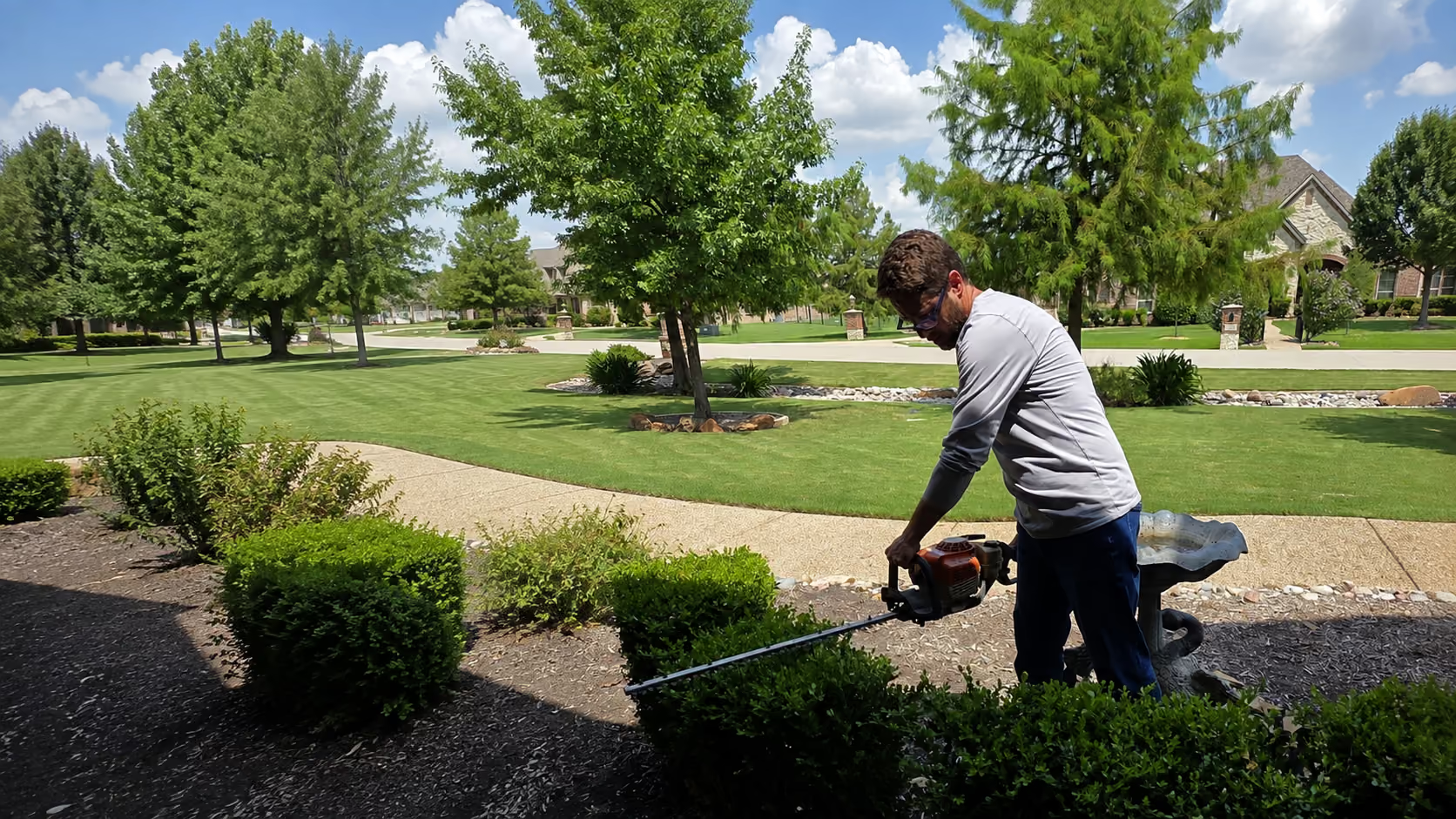
Routine mowing visits handle turf: cut, edge, trim, blow hard surfaces. Heavy leaf removal from big tree canopies, bed cleanouts, and bulk haul-off is landscape / seasonal cleanup work. If your lot sits under mature oaks, plan for leaf volume as its own task—not as something a single mow pass can erase.
Takeaways
- You do not need to bag every fall leaf on Bermuda in DFW.
- Mulch light, dry leaf scatter; remove thick or wet mats.
- If you cannot see mostly green after mulching, clear the excess.
- Consistency beats rare marathon bagging days.
FAQ
Should you bag every fall leaf on Bermuda lawns in DFW?
No. Bag or rake when leaves smother the grass. Mulch the light layer.
Can mulched leaves kill Bermuda?
Not when they are finely chopped and sparse. Whole-leaf mats left in place are the real risk.
What if my trees drop for weeks straight?
Shift to more frequent light cleanups. Waiting for one giant bagging day lets mats sit on the turf too long.