Mowing helps with henbit, chickweed, and other winter weeds, but it isn't a weed killer. Here's what a steady mowing schedule does and doesn't do in DFW.
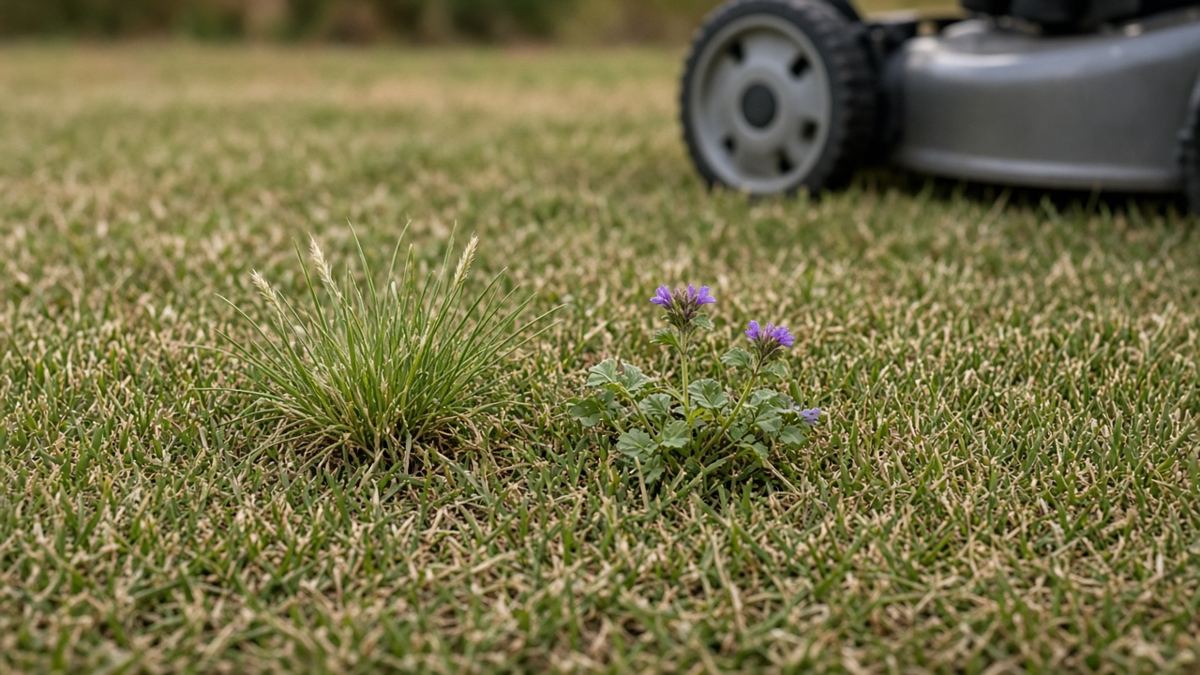
Around this time of year, homeowners across Dallas-Fort Worth start spotting little purple flowers and bright-green clumps popping up in a lawn that's starting to fade. A common belief is that if you just keep mowing, those weeds will get cut down and go away. Mowing does help, but it's not a weed killer.
Short answer: regular mowing won't keep winter weeds out of your DFW lawn on its own, but it does keep them from taking over. Mowing stops many weeds from growing tall and setting seed, and it keeps your lawn even and thick. It doesn't kill weeds that are already rooted.
What counts as a "winter weed" in North Texas
Winter weeds (also called cool-season annual weeds) sprout in the fall when the soil cools, grow through winter while Bermuda is dormant, flower and drop seed in late winter and spring, then die off when the heat comes back. The ones we see most in DFW yards:
| Weed | What it looks like | Does mowing slow it down? |
|---|---|---|
| Henbit | Square stems, scalloped leaves, small purple flowers | Somewhat. It flowers low, so mowing removes some flowers but not all. |
| Chickweed | Low, spreading mat with tiny white flowers | Very little. It grows below most mowing heights. |
| Annual bluegrass (Poa annua) | Light-green grass clumps with whitish seedheads | Very little. It can set seed below the mower blade. |
| Rescuegrass | Tall, coarse clumps with flat seedheads | Yes. Regular cuts keep it from standing tall and seeding. |
What mowing actually does for weeds
- It cuts off seedheads on taller weeds. Fewer seeds dropped this winter means fewer weeds next fall.
- It keeps the lawn looking uniform. Weeds stand out most when they're taller than the dormant grass around them. An even cut makes the yard look tidy all winter.
- It supports a thicker lawn. A healthy, consistently mowed lawn has fewer bare spots, and bare spots are where weeds move in first.
What mowing can't do
- It won't kill rooted weeds. Most winter weeds grow back from the base after a cut.
- It won't stop low-growing weeds from seeding. Chickweed and annual bluegrass flower right at soil level.
- It won't fix the cause. Thin turf, compacted soil, and shady spots invite weeds no matter how often you mow.
A practical plan for DFW homeowners
- Keep mowing on the seasonal schedule. In North Texas that's weekly in October, every other week in November, and once a month from December through February.
- Don't scalp before winter. Cutting dormant Bermuda too short opens the canopy and gives weed seeds more light.
- Keep leaves off the lawn. Matted leaves thin the grass underneath and leave room for weeds in spring.
- Talk to a licensed weed-control provider if weeds are heavy. Treatments like pre-emergent or spot spraying are a separate service from mowing.
The bottom line
Mowing is your first line of defense against winter weeds, not the whole defense. A steady seasonal mowing schedule keeps taller weeds from seeding and keeps your yard looking clean through winter, while a thick, healthy lawn does the rest of the work over time.
Mowing Best keeps your visits on the right seasonal schedule all winter, so weeds never get a head start on a shaggy yard. The best mow. Zero hassle.